
Why Choose Wet Blasting? Benefits, Applications and Limitations

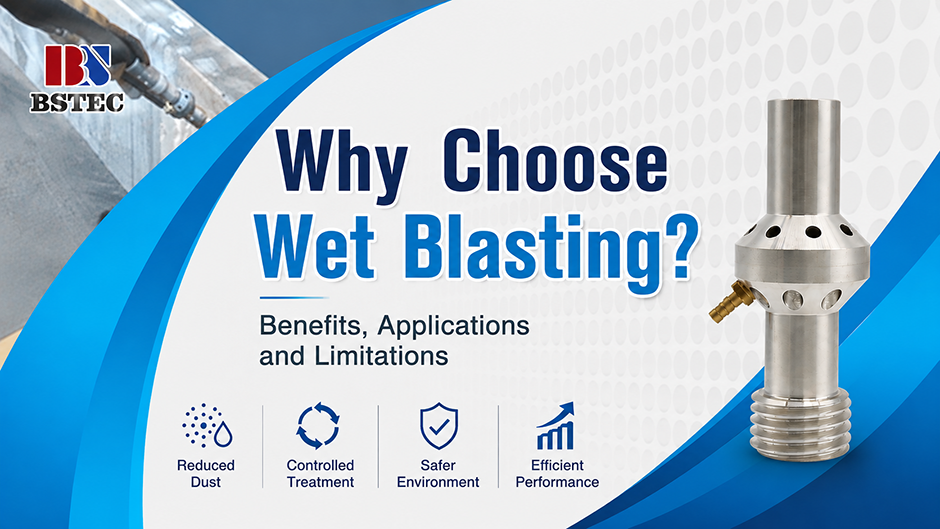
Wet blasting is a surface cleaning and treatment method that combines water with compressed air and abrasive media. By adding water to the blasting process, wet blasting can reduce airborne dust while providing a controlled and consistent surface treatment.
However, wet blasting is not the right choice for every application. The choice between wet and dry blasting depends on factors such as the workpiece material, required surface finish, working environment, and how water and used abrasive media will be handled.
In this article, we explain the key benefits of wet blasting, its limitations, and when it may be a suitable alternative to traditional dry blasting.
What Makes Wet Blasting Different from Dry Blasting?
Dry blasting uses compressed air and abrasive media to clean or prepare a surface. Wet blasting adds water to the air and abrasive stream.
The water helps capture part of the fine dust generated during the blasting process. It can also affect how the abrasive interacts with the surface, providing a more controlled treatment and helping reduce unnecessary material removal.
For certain applications, this makes wet blasting a practical option for cleaning, surface preparation, and applications where dust needs to be controlled.
1. Reduced Dust Generation
One of the main reasons to choose wet blasting is its ability to reduce airborne dust.
When water is introduced into the blasting process, it can capture a portion of the fine particles generated as abrasive media and surface contaminants are broken down. This can help create a cleaner working environment and reduce the spread of dust to surrounding areas.
The actual level of dust reduction depends on the equipment, abrasive media, water flow, pressure, and working conditions.
2. Controlled and Consistent Surface Treatment
Water can affect the movement of abrasive media and its interaction with the workpiece surface. This can provide a more controlled blasting process and contribute to a more consistent surface finish.
This can be useful when a surface needs to be cleaned or treated without unnecessarily removing excessive amounts of the underlying material.
The final result depends on several factors, including:
· Abrasive type and size
· Air pressure
· Water flow
· Stand-off distance
· Blasting angle
· Workpiece material
For this reason, blasting parameters should be adjusted according to the specific application.
3. Reduced Dust Spread in Sensitive Working Environments
When airborne dust needs to be controlled, wet blasting can be a practical alternative to dry blasting.
It can be useful for applications such as cleaning metal components, removing coatings, and other surface treatment processes where the spread of fine particles is a concern.
Wet blasting does not eliminate the need for proper ventilation, personal protective equipment, or other safety measures. The working method should always be selected according to the material, abrasive media, and specific working conditions.
4. Potentially Lower Abrasive Consumption
Water can help control the interaction between abrasive media and the workpiece. Depending on the equipment and application, this may contribute to more efficient use of abrasive media.
Actual abrasive consumption varies considerably depending on equipment, media type, pressure, water flow, and workpiece condition. Therefore, wet blasting should not automatically be assumed to use less abrasive than dry blasting in every application.
5. Suitable for Controlled Cleaning and Surface Preparation
Wet blasting can be used for a variety of cleaning and surface treatment applications.
Typical applications may include:
· Removing dirt and surface contaminants
· Cleaning metal components
· Removing paint and coatings
· Surface preparation before painting or other treatments
· Cleaning applications where dust spread needs to be controlled
For sensitive components, wet blasting can also be considered when a more controlled surface treatment is required.
6. When Is Wet Blasting Not the Best Choice?
Despite its advantages, wet blasting also has limitations.
Because water is used during the process, there must be a suitable method for handling water, contaminated material, and wet waste. On some steel surfaces, moisture can also increase the risk of flash rust, so corrosion control and appropriate post-treatment may be necessary.
Wet blasting may be less suitable when:
· Water cannot be used at the worksite
· Water and wet waste are difficult to collect or dispose of
· The workpiece is sensitive to moisture
· Subsequent drying is difficult
· A completely dry process is required
Wet Blasting vs. Dry Blasting: Which Should You Choose?
There is no single blasting method that is best for every application.
Wet blasting may be suitable when:
· Airborne dust needs to be reduced
· A more controlled surface treatment is required
· Water can be properly managed
· The workpiece can tolerate moisture
· Cleaning and surface preparation need to be combined
Dry blasting may be more suitable when:
· Water cannot be used
· The workpiece must remain dry
· Water and wet waste are difficult to manage
· The process requires a completely dry method
The best choice should therefore be based on the workpiece, surface requirements, abrasive media, working environment, and available equipment.
The Role of a Water Induction Nozzle in Wet Blasting
A water induction nozzle is used to introduce water into the blasting stream. In some systems, water is induced through a Venturi effect and mixed with the air and abrasive media near the nozzle outlet.
This allows water to be introduced into the blasting process without requiring a complete redesign of the blasting equipment.
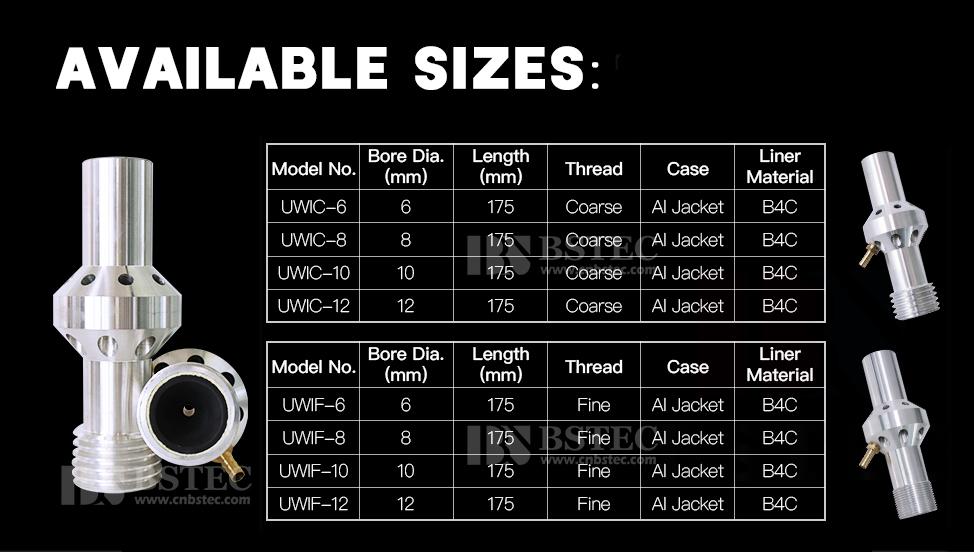
Water induction nozzles are available in different designs and sizes. The appropriate model should be selected according to the blasting equipment, nozzle diameter, operating pressure, and required water flow.
BSTEC provides water induction nozzles in different sizes for wet blasting applications. Contact us to discuss the appropriate size and configuration for your equipment.
How to Choose the Right Nozzle for Wet Blasting
The nozzle can have a direct impact on blasting performance and process stability.
Before selecting a nozzle, consider:
1. Nozzle diameter – Choose a size compatible with your equipment and required blasting capacity.
2. Operating pressure – Make sure the nozzle is suitable for the system's working pressure.
3. Abrasive media – Different abrasive materials can require different levels of wear resistance.
4. Water flow – Adjust the water flow according to the required dust control and application.
5. Workpiece and surface requirements – Select process parameters based on the material and desired surface result.
Choosing the right nozzle is an important part of establishing a stable and efficient wet blasting system.
Frequently Asked Questions About Wet Blasting
1. Does wet blasting reduce dust?
Yes. Water can capture a significant portion of the fine particles generated during blasting and reduce airborne dust. The actual level of dust reduction depends on the equipment, abrasive media, and working conditions.
2. Does wet blasting use less abrasive media?
It can in some systems and applications, but abrasive consumption depends on multiple process parameters. Actual consumption should be evaluated based on the specific application.
3. Can wet blasting cause rust?
Yes. Water can increase the risk of flash rust on certain iron and steel surfaces. Rapid drying, corrosion protection, or other appropriate measures may therefore be required after treatment.
4. Is wet blasting better than dry blasting?
Not generally. Wet blasting can offer advantages when dust control and controlled surface treatment are important, while dry blasting may be more practical when water cannot be used or managed.
5. What nozzle is used for wet blasting?
A water induction nozzle can be used to introduce water into the air and abrasive stream. The nozzle size and design should be selected according to the equipment and application.
Conclusion
Wet blasting is a useful alternative to dry blasting when dust control, controlled surface treatment, and working conditions are important considerations.
At the same time, the process requires appropriate handling of water and wet waste, and certain materials may require additional measures to prevent flash rust.
The right choice therefore depends on the specific application. By selecting the appropriate abrasive media, air pressure, water flow, and water induction nozzle, the wet blasting process can be adapted to different cleaning and surface treatment requirements.


