
Typical Applications of Sandblasting Across Industries

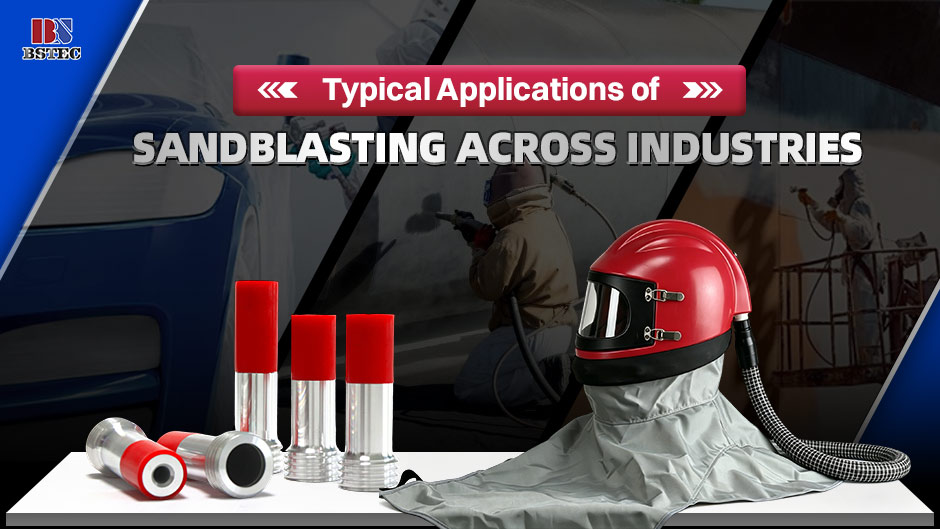
Sandblasting technology serves a remarkably diverse range of industries, each with unique requirements for surface preparation, cleaning, and finishing. Understanding these applications helps explain why sandblasting remains an indispensable industrial process despite the emergence of alternative technologies.
Automotive Industry Applications
Sandblasting equipment is essential throughout the automotive sector, from manufacturing to restoration. Automakers and service shops use blasting to prepare vehicle surfaces for painting, ensuring proper paint adhesion and high-quality finishes. With over 85 million vehicles produced globally, the demand for surface preparation is substantial.
In manufacturing, sandblasting removes mill scale from chassis components, cleans engine blocks before assembly, and prepares body panels for primer application. The consistent surface profile created by blasting ensures that paints and coatings bond properly, extending vehicle life and improving appearance.
Automotive restoration represents a particularly demanding application. Restorers use sandblasting to clean rims, frames, engine components, and suspension parts down to bare metal, revealing the original surface condition and identifying hidden damage. Delicate operations may employ walnut shells or glass beads to clean without warping thin panels or damaging underlying surfaces. The ability to achieve factory-original finishes makes sandblasting indispensable for concours-quality restorations.
Construction and Infrastructure
The construction industry relies heavily on sandblasting for cleaning steel structures, trusses, pipes, and welded assemblies before coating. Bridge maintenance represents one of the most critical applications—corroded bridges require thorough cleaning to remove rust and failing paint before new protective systems can be applied. The safety of these structures depends directly on the quality of surface preparation.
Building restoration projects frequently employ sandblasting to clean masonry, remove graffiti, and prepare surfaces for refinishing. Historic preservation requires careful media selection—baking soda or low-pressure glass bead blasting can clean delicate stonework without the aggressive cutting that would damage architectural details. Concrete cleaning and texturing for architectural finishes also fall within construction applications.
Infrastructure development in emerging economies is driving significant demand for both portable and stationary equipment. New bridges, tunnels, and industrial facilities all require surface preparation before coating, creating sustained demand for reliable blasting equipment.
Marine Industry Applications
Shipyards represent one of the most demanding environments for sandblasting equipment. Preparing ship hulls, decks, and offshore platforms requires high-output systems capable of continuous operation in challenging conditions. A single large vessel may require hundreds of hours of blasting to prepare its entire surface area for coating.
New construction shipbuilding involves blasting steel plates and sections as they arrive from mills, removing mill scale and creating the anchor profile necessary for primer application. Subsequent fabrication steps may require localized blasting of welds and damaged areas before final coating.
Maintenance and repair shipyards face even greater challenges. Removing years of accumulated corrosion and multiple layers of old coating requires aggressive blasting while managing environmental concerns. Portable wheel blasting machines are specifically designed for large flat surfaces like helicopter decks and bridge decks, dramatically improving productivity compared to manual blasting.
Offshore platforms present unique challenges—blasting must be performed at height, in confined spaces, and often in adverse weather conditions. The marine environment's extreme corrosion risk makes thorough surface preparation before coating absolutely critical for asset longevity.
Aerospace Industry Applications
Aerospace applications demand exceptional precision and quality control, making them among the most technically demanding sandblasting operations. Surface preparation for thermal spray coatings on turbine engine components requires precise control of surface roughness and cleanliness. Contamination that would be acceptable in general fabrication can cause catastrophic failure in aerospace applications.
Engine component maintenance involves removing thermal barrier coatings, cleaning combustion section parts, and preparing surfaces for inspection. Glass bead blasting is particularly valued for creating smooth, polished surfaces on stainless steel and titanium components without altering dimensional tolerances or introducing surface contamination.
Aircraft structural repairs require careful paint removal without damaging underlying aluminum or composite materials. Low-pressure blasting with soft media removes coatings while leaving the base material untouched, preserving structural integrity while enabling proper inspection and repair.
Oil and Gas Industry
Pipelines, storage tanks, and processing equipment require regular maintenance and corrosion protection in some of the world's harshest environments. Sandblasting removes old coatings and rust while creating the anchor profile necessary for new protective systems.
Pipeline maintenance involves cleaning long sections of pipe, often in remote locations. Portable equipment capable of continuous operation must be transported to sites with limited infrastructure. Internal pipeline cleaning for in-service inspection represents a specialized application requiring custom tooling and precise control.
Refinery turnaround maintenance creates intense demand for blasting services during scheduled shutdowns. Vessels, heat exchangers, and structural steel must be cleaned and coated within tight schedules, requiring high-capacity equipment and experienced operators. Refinery environments also demand strict safety protocols due to the presence of flammable materials and confined spaces.
Metal Fabrication and Manufacturing
From removing mill scale from new steel to deburring machined components, sandblasting is integral to metalworking. Steel service centers use automated wheel blasting machines to process plates, beams, and sheets before delivery to fabricators. The clean, uniform surface improves subsequent processing and ensures coating quality.
Foundries rely heavily on blasting to clean castings of all sizes. Automotive castings, industrial valves, pump housings, and decorative castings all require removal of sand, scale, and flash before machining or finishing. Wheel blasting machines process high volumes economically, while manual blasting handles complex geometries and large castings.
Surface texturing of tooling and molds alters the appearance of molded products, demonstrating blasting's role beyond simple cleaning. Injection molds, forming dies, and embossing rolls receive precisely controlled surface finishes that transfer to manufactured products. This application requires exceptional consistency and control.
Specialty Applications
Beyond these major industries, sandblasting serves numerous specialty applications. Fire damage restoration uses soda blasting to remove soot and smoke residue without driving contaminants deeper into surfaces. Concrete preparation for epoxy coatings requires aggressive blasting to open the surface profile. Art and architectural glass receives decorative finishes through controlled abrasive etching. Monument restoration cleans weathered stone without the aggressive cutting of mechanical methods. Ship propeller polishing improves hydrodynamic efficiency through carefully controlled media blasting.
Quality Standards and Specifications
Professional sandblasting operations follow established standards to ensure consistent results. The SSPC (Steel Structures Painting Council) and NACE (National Association of Corrosion Engineers) standards define degrees of cleanliness from SSPC SP7 (light brush-off cleaning) through SSPC SP5/NACE 1 (white metal cleaning, where all visible contaminants are completely removed). These specifications guide equipment selection and operational parameters based on the coating system's requirements and the service environment's severity.
Conclusion
Sandblasting applications span virtually every industry that works with metal, concrete, or coated surfaces. The common thread across all applications is the fundamental principle: accelerating abrasive media to prepare surfaces for their next purpose—whether that be coating, bonding, inspection, or final use. As industries demand higher quality, improved worker safety, and reduced environmental impact, sandblasting techniques continue to evolve to meet these challenges. Selecting the appropriate equipment and media for each application remains essential to achieving optimal results in terms of surface quality, productivity, and operating costs.


