
Sandblasting Equipment: Types, Components, and Selection Guide

Sandblasting, also known as abrasive blasting, is a fundamental surface preparation process used across virtually every heavy industry. By propelling abrasive media at high velocity against a surface, sandblasting removes rust, old coatings, scale, and contaminants while simultaneously creating a surface profile that enhances the adhesion of new protective coatings. The effectiveness of this process depends critically on selecting the right equipment for the specific job—from small delicate components to massive ship hulls and industrial structures.
Core Components of Sandblasting Equipment
Every sandblasting system, regardless of size or complexity, consists of several essential components that work together to deliver effective surface preparation.
The pressurization system—typically an air compressor—provides the energy to propel abrasive media. Unlike many pneumatic applications where pressure is paramount, sandblasting demands continuous, high-volume airflow. Compressor requirements scale dramatically with nozzle size: while a small 3mm nozzle may need only 0.3-0.8 m³/min of air, a large 13mm nozzle used in shipyards can consume up to 13.0 m³/min. This relationship makes proper compressor sizing critical for productive blasting operations.
The blasting machine (or blast pot) stores and meters abrasive media into the air stream. These vessels range from small portable units holding less than 100 liters to massive stationary systems exceeding 3000 liters capacity. The mixing valve precisely controls the ratio of air to abrasive, determining cleaning intensity and media consumption.
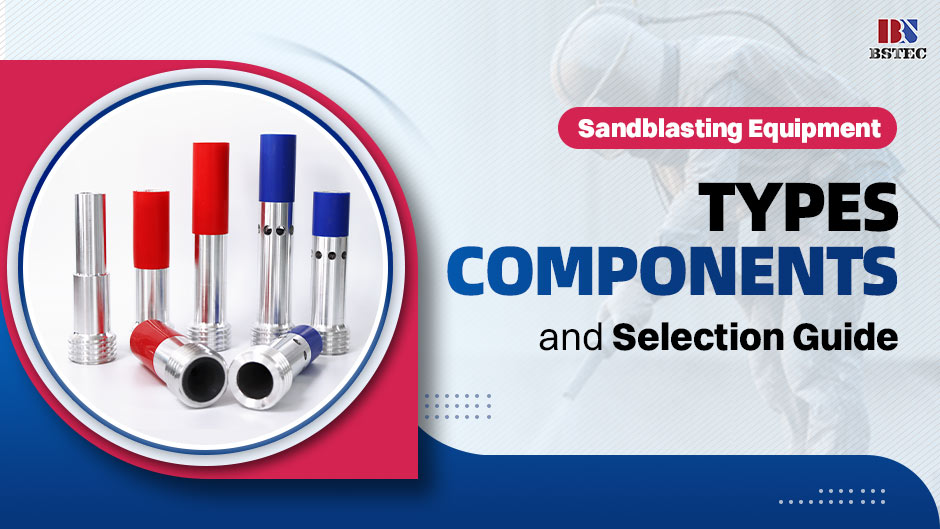
Blasting nozzles represent the business end of the system. Manufactured from wear-resistant materials like tungsten carbide or boron carbide, nozzles direct the abrasive stream and significantly influence cleaning efficiency. Nozzle distance from the work surface is a critical variable: short distances (5-15 cm) provide aggressive cleaning and deep anchor profiles, medium distances (15-30 cm) balance efficiency with control, while distances exceeding 30 cm dramatically reduce effectiveness.
Safety equipment and dust collection systems complete the installation. Operators require specially supplied breathing air, protective suits, and helmets to prevent exposure to airborne particulates. Dust collectors capture spent media and contaminants, maintaining visibility and complying with environmental regulations.
Types of Sandblasting Equipment
Sandblasting equipment has diversified to address the full spectrum of industrial requirements, from precision finishing to heavy-duty structural cleaning.
Portable Sandblasters
Portable units account for a significant portion of the market, driven by their mobility and flexibility across multiple job sites. These systems are mounted on wheels or skids and can be transported to remote locations for on-site maintenance of bridges, pipelines, storage tanks, and offshore platforms. Their versatility makes them indispensable for industries where work locations frequently change.
Stationary Systems
Stationary equipment dominates the market, preferred for heavy-duty commercial and industrial applications where fixed, large structures require treatment. These installations include blast rooms—large enclosed spaces where operators can work on components of varying sizes while dust is contained and abrasive is recovered and recycled. The ability to reuse media significantly reduces operating costs and waste disposal requirements.
Blast Cabinets
For smaller work pieces, blast cabinets provide an enclosed environment where operators stand outside and reach through gloves to manipulate the nozzle. These cabinets prevent dust escape and ensure safe working conditions for applications like automotive restoration, mold cleaning, and small fabrication work.
Automated and Robotic Systems
The automatic segment is experiencing substantial growth, holding a significant market share. Automation addresses the need for precision, productivity, and worker safety, particularly in high-volume production environments. Robotic blasting systems can operate continuously with consistent quality, reducing labor costs while improving surface finish repeatability.
Wheel Blasting Machines
Unlike compressed air systems, wheel blasting uses centrifugal force from rotating turbines to propel abrasive. These machines are exceptionally cost-effective for high-volume production, as they run on electricity rather than compressed air and can use economical steel shot and grit. Typical applications include cleaning steel plates, beams, pipes, and castings in foundries and fabrication shops.
Wet Blasting Equipment
Wet blasting systems mix water with abrasive to suppress dust generation—a significant advantage when cleaning facades, removing graffiti, or working in sensitive environments. While slower than dry blasting and producing less surface profile, wet systems minimize airborne particulates and are preferred for applications where dust control is paramount.
Specialized Systems
Vacuum blasting combines traditional blasting with integrated vacuum extraction, capturing spent media and dust at the point of impact. This zero-dust approach is slower but ideal for work in occupied areas or where hazardous materials require containment. Dry ice blasting uses solid CO₂ pellets that sublimate upon impact, leaving no secondary waste—perfect for cleaning sensitive equipment without disassembly.
Equipment Selection Factors
Choosing the right sandblasting equipment requires careful consideration of several factors. The size and nature of the workpiece determines whether a cabinet, portable unit, or blast room is appropriate. Production volume influences whether manual, automated, or wheel blasting systems are most economical. Surface and coating requirements dictate the necessary cleanliness standards and anchor profiles. Environmental regulations may mandate dust collection, wet blasting, or vacuum systems. Finally, operator safety must always remain paramount, with proper ventilation, protective equipment, and supplied-air systems specified for all applications.


