
Silicon Carbide vs. Tungsten Carbide Seal Rings: A Complete Material Comparison for Chemical Processing Applications

Introduction
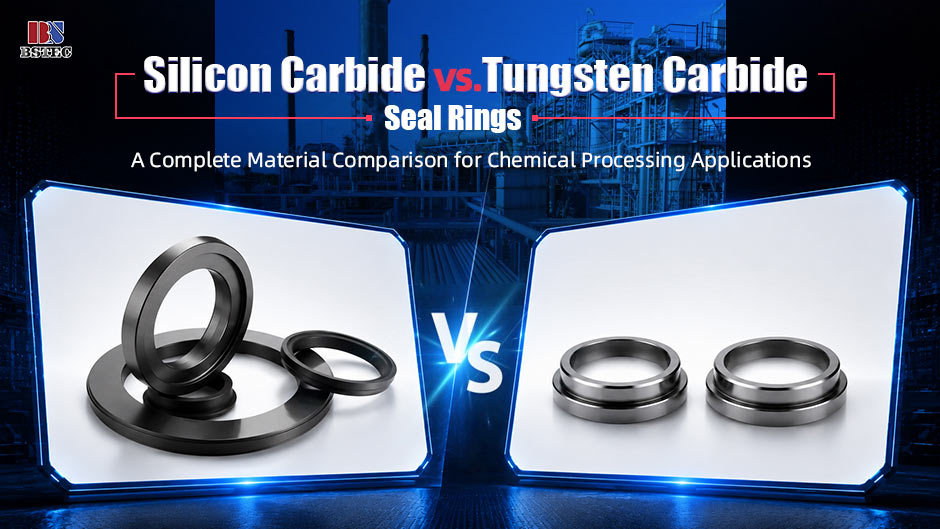
Chemical processing environments are among the most punishing for mechanical seals. Aggressive acids, caustic solutions, solvents, and extreme temperatures attack seal faces continuously. Choosing the wrong material can lead to rapid seal failure, costly downtime, and environmental hazards. This article provides a complete comparison of silicon carbide and tungsten carbide seal rings specifically for chemical processing applications.
Chemical Resistance: The Critical Difference
This is where silicon carbide clearly outperforms tungsten carbide. SiC exhibits exceptional resistance to a wide range of chemicals, including strong acids, alkalis, and organic solvents. Testing data shows near-zero weight loss (≒0.00 mg/cm²) when exposed to 95% sulfuric acid at 95°C or 30% sodium hydroxide at 80°C.
Tungsten carbide, while strong, is susceptible to chemical attack. Cobalt binders commonly used in WC manufacturing can leach out in acidic environments, compromising the seal face integrity. In highly corrosive chemical applications, tungsten carbide seals may degrade rapidly, leading to premature failure.
Temperature Considerations
Chemical processing often involves elevated temperatures. Silicon carbide maintains its chemical stability and mechanical strength up to 1,950°C, far beyond the range of any typical chemical process. Tungsten carbide begins to oxidize at temperatures above 500°C in oxidizing environments, limiting its application in high-temperature chemical settings.
Self-Lubricating Properties
Silicon carbide offers excellent self-lubricating qualities, which is particularly valuable in chemical processing where traditional lubricants may be incompatible with the process media. This property reduces friction and wear, extending seal life even under challenging conditions.
Tungsten carbide does not offer the same lubricity and typically requires better fluid film formation to avoid dry running.
Verdict: Which for Chemical Processing?
For chemical processing applications — especially those involving acids, caustics, or aggressive organic solvents — silicon carbide is the clear winner. Its superior chemical resistance, high-temperature stability, and self-lubricating properties make it the standard choice for chemical seal rings.
Tungsten carbide should be reserved for chemical applications with minimal corrosion risk but high mechanical shock or debris concerns.
Selecting the right seal ring material for your chemical processing application requires careful analysis of your specific operating conditions. Every process is unique, and the wrong choice can lead to costly downtime, product loss, and safety hazards.
At BSTEC, we have decades of experience helping chemical processors select and manufacture the optimal silicon carbide and tungsten carbide seal rings for their specific needs. Our engineering team can review your process parameters—temperature, pressure, chemical composition, solids content, and equipment type—and recommend the ideal material grade for your application.


