Silicon Carbide vs. Tungsten Carbide Mechanical Seals: Which One Delivers Longer Service Life in High-Speed Rotating Equipment?

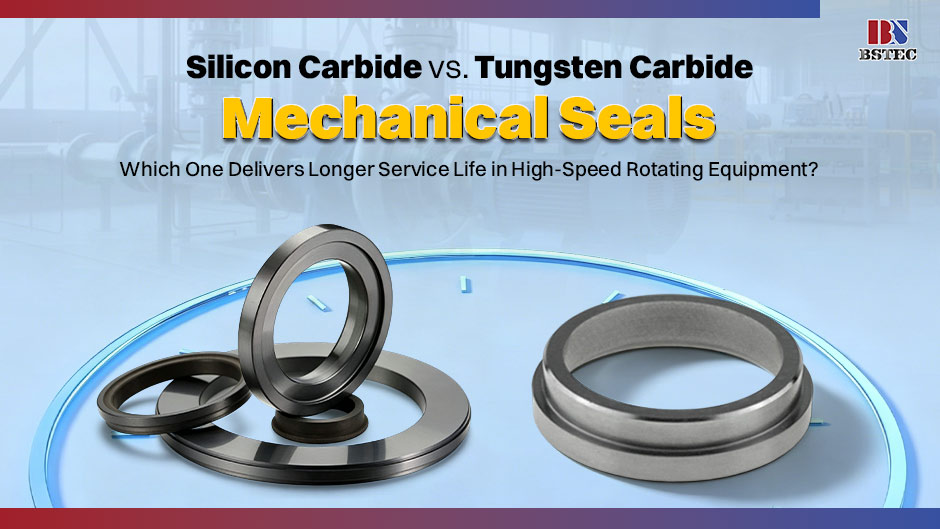
Silicon Carbide vs. Tungsten Carbide Mechanical Seals: Which One Delivers Longer Service Life in High-Speed Rotating Equipment?

2026-09-01 Share

Silicon Carbide vs. Tungsten Carbide Mechanical Seals: Which One Delivers Longer Service Life in High-Speed Rotating Equipment? Introduction  When selecting mechanical seals for high-speed rotating equipment such as centrifugal pumps, mixers, and compressors, material choice directly determines service life, maintenance frequency, and total cost of ownership. Two materials dominate this space: silicon carbide (SiC) and tungsten carbide (WC). Both offer exceptional performance, but they excel in different conditions. This article compares their durability in high-speed applications to help you make the right choice. How Speed Affects Seal Performance High-speed rotation generates two major challenges for mechanical seals: frictional heat and centrifugal stress. The sealing interface experiences rapid temperature rise, and the materials must maintain dimensional stability under continuous thermal cycling. If the seal face cannot dissipate heat quickly enough, lubricating films break down, leading to dry running, increased wear, and eventual seal failure. Silicon Carbide: The Heat Dissipation Expert  Silicon carbide stands out for its exceptional thermal conductivity, reaching up to 160 W/m·K. This property allows heat generated at the seal interface to dissipate rapidly, maintaining stable operating temperatures even at high rotational speeds. Additionally, SiC offers excellent lubrication qualities, reducing friction coefficients and minimizing heat generation in the first place. In high-speed applications, SiC seals typically maintain their integrity for extended periods, provided they are not subjected to mechanical shock or debris. The material's hardness (2,800 HV) ensures minimal wear under normal operating conditions. Tungsten Carbide: The Toughness Champion  Tungsten carbide, while having lower thermal conductivity (approximately 70–100 W/m·K), offers superior fracture toughness. In high-speed equipment where vibration or minor misalignment may occur, tungsten carbide's resistance to cracking gives it a distinct advantage. It can withstand occasional contact with debris or particles without catastrophic failure. However, tungsten carbide is significantly denser (approximately 15 g/cm³ compared to SiC's 3.16 g/cm³). This higher density creates greater centrifugal forces at high speeds, potentially increasing stress on the seal assembly and drive components. 然而,碳化钨的密度要大得多(约15 g/cm³,而碳化硅仅为3.16 g/cm³)。这种更高的密度在高速旋转下会产生更大的离心力,可能增加密封组件和传动部件的应力。 Service Life Comparison When to choose silicon carbide	In clean, high-speed applications with proper alignment and no debris, silicon carbide typically delivers a longer service life. Its superior thermal management prevents hot spots and thermal cracking, while its hardness resists wear. When to choose tungsten carbide	In applications where vibration, misalignment, or debris cannot be completely eliminated, tungsten carbide may prove more durable due to its toughness. It can survive minor impacts that would shatter a silicon carbide ring. Verdict: Which One Lasts Longer?  For clean, well-maintained high-speed rotating equipment, silicon carbide delivers longer service life due to superior thermal conductivity and wear resistance. For applications with debris, vibration, or risk of mechanical shock, tungsten carbide's toughness provides better survival rates. If your priority is maximum service life in ideal conditions, choose silicon carbide. If your equipment operates in less predictable environments, tungsten carbide is the safer choice.Introduction 

When selecting mechanical seals for high-speed rotating equipment such as centrifugal pumps, mixers, and compressors, material choice directly determines service life, maintenance frequency, and total cost of ownership. Two materials dominate this space: silicon carbide (SiC) and tungsten carbide (WC). Both offer exceptional performance, but they excel in different conditions. This article compares their durability in high-speed applications to help you make the right choice.


How Speed Affects Seal Performance

High-speed rotation generates two major challenges for mechanical seals: frictional heat and centrifugal stress. The sealing interface experiences rapid temperature rise, and the materials must maintain dimensional stability under continuous thermal cycling. If the seal face cannot dissipate heat quickly enough, lubricating films break down, leading to dry running, increased wear, and eventual seal failure.


Silicon Carbide: The Heat Dissipation Expert 

Silicon carbide stands out for its exceptional thermal conductivity, reaching up to 160 W/m·K. This property allows heat generated at the seal interface to dissipate rapidly, maintaining stable operating temperatures even at high rotational speeds. Additionally, SiC offers excellent lubrication qualities, reducing friction coefficients and minimizing heat generation in the first place.


In high-speed applications, SiC seals typically maintain their integrity for extended periods, provided they are not subjected to mechanical shock or debris. The material's hardness (2,800 HV) ensures minimal wear under normal operating conditions.


Tungsten Carbide: The Toughness Champion 

Tungsten carbide, while having lower thermal conductivity (approximately 70–100 W/m·K), offers superior fracture toughness. In high-speed equipment where vibration or minor misalignment may occur, tungsten carbide's resistance to cracking gives it a distinct advantage. It can withstand occasional contact with debris or particles without catastrophic failure.


However, tungsten carbide is significantly denser (approximately 15 g/cm³ compared to SiC's 3.16 g/cm³). This higher density creates greater centrifugal forces at high speeds, potentially increasing stress on the seal assembly and drive components.


Service Life Comparison

When to choose silicon carbide

In clean, high-speed applications with proper alignment and no debris, silicon carbide typically delivers a longer service life. Its superior thermal management prevents hot spots and thermal cracking, while its hardness resists wear.

When to choose tungsten carbide

In applications where vibration, misalignment, or debris cannot be completely eliminated, tungsten carbide may prove more durable due to its toughness. It can survive minor impacts that would shatter a silicon carbide ring.


Verdict: Which One Lasts Longer? 

For clean, well-maintained high-speed rotating equipment, silicon carbide delivers longer service life due to superior thermal conductivity and wear resistance. For applications with debris, vibration, or risk of mechanical shock, tungsten carbide's toughness provides better survival rates.


If your priority is maximum service life in ideal conditions, choose silicon carbide. If your equipment operates in less predictable environments, tungsten carbide is the safer choice.

ਸਾਨੂੰ ਮੇਲ ਭੇਜੋ
ਕਿਰਪਾ ਕਰਕੇ ਸੁਨੇਹਾ ਭੇਜੋ ਅਤੇ ਅਸੀਂ ਤੁਹਾਡੇ ਕੋਲ ਵਾਪਸ ਆਵਾਂਗੇ!