
The Ultimate Guide to Sandblasting Hose Safety and Whip Check Installation

The Ultimate Guide to Sandblasting Hose Safety and Whip Check Installation
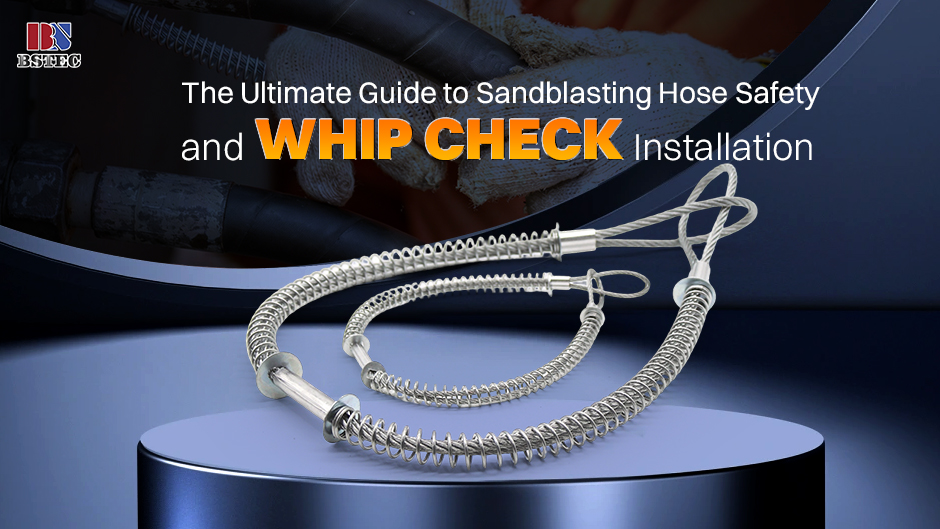
Your sandblasting hose is the critical lifeline that delivers air and abrasive to the nozzle. Its failure is not a simple inconvenience; it's a major safety event. This ultimate guide will walk you through everything you need to know to maintain hose integrity and ensure you have the correct backup—the whip check—installed properly.
Part 1: Sandblasting Hose Safety - Inspection & Maintenance
A proactive approach is the only safe approach.
Visual Inspection (Daily):
Abrasions & Cuts: Look for any signs of the outer jacket being worn through, especially in areas that contact the ground or rub against other surfaces.
Bulges & Blisters: These indicate that the inner reinforcement layer has been damaged, and the hose is weakening from the inside out. Retire the hose immediately.
Kinks & Crushing: Permanent kinks restrict airflow and create weak points. Never use a kinked hose.
Coupling Damage: Check for cracked, corroded, or loose couplings. Ensure the threads are not stripped.
Pressure Safety:
Know the Rating: Never use a hose with a maximum working pressure (MWP) rating below your system's operating pressure. Always include a safety margin.
Avoid Pressure Spikes: Open and close system valves gradually. Sudden surges can damage hoses and equipment.
Part 2: The Whip Check - Your Essential Safety Backup
Even with a perfect hose, couplings can fail. The whip check is your dedicated device for this specific scenario.
Why It's Non-Negotiable: It physically prevents the hose from whipping, protecting personnel from lethal injury and preventing massive property damage.
Selection Criteria (Recap):
Hose Diameter: Match the whip check size to your hose's OD.
Pressure Rating: Ensure it meets/exceeds your system pressure.
Build Quality: Forged steel fittings and a flexible steel cable are a must.
Part 3: Step-by-Step Whip Check Installation Guide
SAFETY FIRST: DEPRESSURIZE! Disconnect the hose and trigger the gun to release all air pressure from the entire system. Confirm zero pressure.
Identify Attachment Points: You need a fixed point on the air supply line (e.g., a nipple) and the coupling on the air hose itself.
Attach to Supply Side: Hand-tighten one end of the whip check to the fixed nipple on the supply line.
Attach to Hose Side: Hand-tighten the other end to the coupling on the air hose.
Final Tightening: Use two wrenches. Hold the base coupling with one wrench to prevent it from turning, and use the other to tighten the whip check fitting. This is crucial to avoid damaging the hose assembly.
Check for Proper Slack: The cable should not be taut. It must have a slight slack to allow for normal movement and vibration, but be short enough to restrain the hose completely if it detaches.
Conclusion: Safety is a System
Hose safety isn't just about the hose itself. It's a system that includes regular inspection, proper use, and having a failsafe—the correctly installed whip check. By following this guide, you are not just maintaining equipment; you are upholding a culture of safety.
→ For your peace of mind, use only high-quality components. Shop our selection of durable sandblasting hoses and certified Whip Check Safety Cables. Click our website to choose the whip check for abrasive blasting: www.cnbstec.com


