
How to Choose and Install the Right Whip Check for Your Sandblasting Hose

How to Choose and Install the Right Whip Check for Your Sandblasting Hose
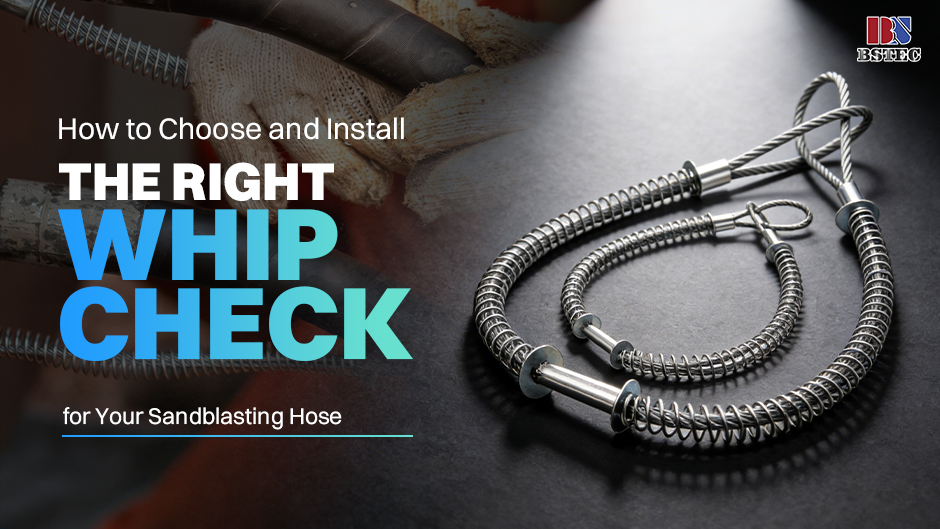
You know you need a whip check, but how do you select the right one and ensure it's installed correctly? An improperly chosen or fitted safety cable can give you a false sense of security. Let's walk through the process to ensure your worksite is truly protected.
Step 1: Choosing the Right Whip Check
• Check the Diameter: The most crucial factor is the hose diameter. Whip checks are rated for specific hose sizes. Using one that's too large won't provide a secure fit, and one that's too small won't fit at all. Use a caliper or a tape measure to accurately determine your air hose's outer diameter (OD) before selecting the correct size.
• Assess the Working Pressure: Ensure the whip check's rated working pressure meets or exceeds the maximum pressure of your sandblasting system. Never use a component rated below your system's operating pressure.
• Inspect the Hardware: Look for robust, forged steel fittings and a high-quality, flexible steel cable. The fittings should have clear, deep threading to ensure a tight, secure grip. Avoid products with thin, cast fittings that can crack under stress.
• Consider the Environment: For standard blasting environments, a zinc-plated cable offers good corrosion resistance. For more corrosive environments (e.g., near saltwater or in chemical plants), consider stainless steel models for maximum longevity.
Step 2: Installing Your Whip Check (The Right Way)
What You'll Need: Your whip check, two appropriate wrenches.
Disconnect and Depressurize: Always, without exception, disconnect the air hose from the supply and bleed all air pressure from the entire system before installation. This is the most critical safety step.
Position the Cable: Attach one end of the whip check to the fixed nipple or pipe on the air supply line. Hand-tighten the fitting to get it started.
Secure the Second End: Attach the other end of the cable to the coupling on the air hose itself.
Tighten with Wrenches: Use two wrenches to tighten the fittings firmly. Use one wrench to hold the base coupling (on the hose or pipe) steady to prevent it from twisting, and the other to tighten the whip check fitting. This "back-up" wrench technique prevents damaging the hose assembly or supply line. Tighten firmly until snug, but avoid over-tightening which can strip the threads and create a new point of failure.
Leave Minimal Slack: The cable should have a very slight slack, just enough to allow for normal movement and vibration during operation. It should not be pulled taut, as this puts constant stress on the fittings. However, it must be short enough to restrain the hose effectively and prevent any significant whip if it detaches.
A properly installed whip check is a functional one. It's a simple 5-minute procedure that can save a life. Make it a standard part of your equipment setup procedure.
→ Need high-quality, easy-to-install whip checks? Explore our range, available in various sizes and materials to fit your specific equipment and environment. Click on our website to choose the whip check for abrasive blasting: www.cnbstec.com


