
Your Sandblasting Nozzle Size Guide

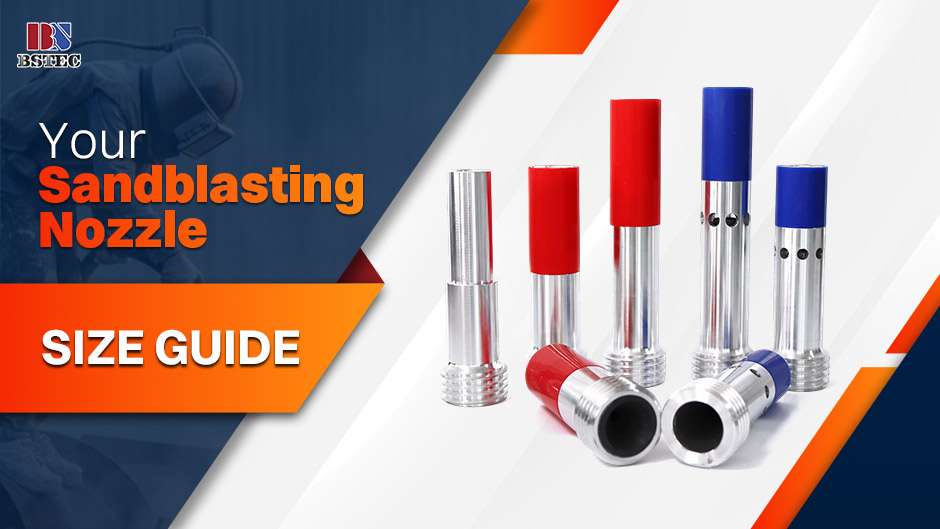
Selecting the correct nozzle size is the most critical operational decision in abrasive blasting. The diameter of the nozzle bore directly dictates your productivity, surface finish quality, and operational cost. This guide focuses exclusively on helping you choose the right size for your job.
1. The Fundamental Rule: Bore Diameter
The Internal Diameter (Bore) of the nozzle, measured in inches or millimeters, is the key metric. It controls the abrasive stream's characteristics:
· Smaller Bore (e.g., 1/8" - 3/16"): Produces a high-velocity, focused stream. Ideal for detail work, etching, or precise cleaning. Coverage area is small, and speed is slower.
· Larger Bore (e.g., 3/8" - 1/2"): Allows a high volume of abrasive and air to pass. Provides fast coverage on large areas but with a less concentrated, lower-impact stream.
2. The Size Selection Chart: Match Your Primary Goal
Use this chart as your primary reference. Select based on your main objective.
| Nozzle Bore Size | Recommended Applications | Performance Profile | Critical Requirement |
| 1/8" (3.2mm) | Fine engraving, glass etching, deburring small parts, and pinpoint rust removal. | Maximum precision. Small work area, slower speed. | Lower CFM compressor. Requires steady operator control. |
| 3/16" (4.8mm) | Automotive spot repair (paint/rust), mold cleaning, and general cleaning of medium parts. | Best balance of precision and speed. Highly versatile. | Medium-sized compressor (approx. 50-70 CFM). |
| 1/4" (6.4mm) | The most versatile, standard size. Full auto stripping, structural steel cleaning, equipment refurbishment, and large-scale cleaning. | Optimal balance of efficiency and versatility. The workshop workhorse. | Ample compressor supply (approx. 80-100 CFM). |
| 5/16" (7.9mm) | Large machinery, ship decks, concrete walls, and heavy tank cleaning. | High-production cleaning. Large coverage, higher abrasive consumption. | Large industrial compressor (approx. 110-130 CFM). |
| 3/8" (9.5mm) & Above | Hulls, bridges, large industrial structures, and building facades. | Maximum production speed. For heavy industry. | Very large air supply system (150+ CFM). |
Pro Tip: For most workshops, auto restoration, and general industrial maintenance, start with a 1/4-inch nozzle as your baseline. Go smaller for detail, larger for speed.
3. The Non-Negotiable Constraint: Air Compressor Capacity
Your nozzle size choice is limited by your air compressor's output. Larger nozzles require exponentially more air volume (CFM - Cubic Feet per Minute). A fundamental rule of thumb:
Required Minimum CFM ≈ Nozzle Bore (in inches) × 100
· Example for 1/4" nozzle: 0.25 × 100 = 100 CFM
· Example for 5/16" nozzle: 0.3125 × 100 = 112 CFM
You must ensure your compressor's delivered CFM at operating pressure (90-100 PSI) meets or exceeds this requirement. An undersized compressor will cause a severe drop in pressure and efficiency.
4. Design Consideration: Venturi vs. Straight Bore
After selecting the bore size, consider the nozzle type. A standard straight-bore nozzle allows the stream to spread. A venturi nozzle (with a tapered, accelerating design) produces a tighter, more coherent stream, delivering up to 30% greater efficiency. It conserves abrasive and reduces job time. For frequent use, the higher initial cost of a Venturi nozzle offers a strong return on investment.
5. Maintenance: The Silent "Size Changer."
Nozzles are consumables. As the bore wears and enlarges, performance plummets:
· Air and abrasive consumption skyrocket.
· Pressure and cleaning power drop.
· The work becomes inconsistent.
Recommendation: Regularly check the bore with gauge pins. Replace the nozzle when the bore is worn 1/32-inch over its original size. Replace all nozzles in a multi-gun setup simultaneously for consistent results.
Your Size Selection Checklist
1. Define the Task: Detail work or fast coverage?
2. Check Your Air: What is your compressor's sustainable CFM output?
3. Consult the Chart: Use Steps 1 & 2 to select your core bore size.
4. Evaluate Usage: For frequent blasting, invest in a Venturi design nozzle.
5. Maintain Rigorously: Inspect and replace nozzles promptly to maintain the chosen size's performance.
Choosing the correct nozzle size transforms your blaster from a simple tool into an efficient, predictable system. Use this guide to make an informed choice that balances quality, speed, and cost for every project.


