
The Ultimate Guide to ABS Sandblast Helmets with Breathing Hose

The Ultimate Guide to ABS Sandblast Helmets with Breathing Hose
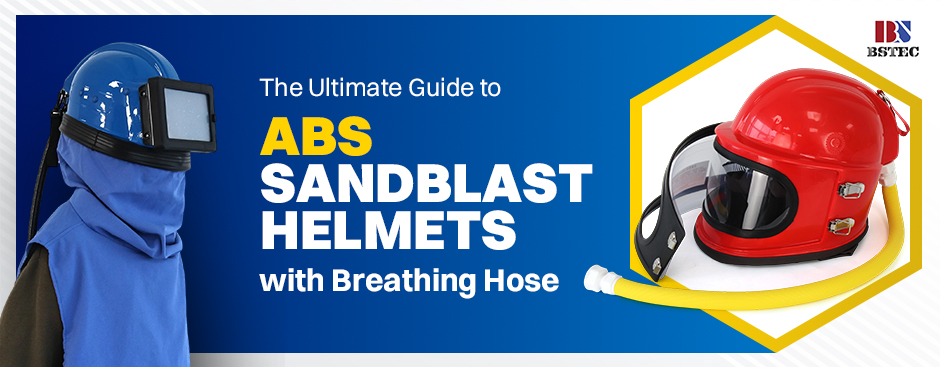
In the aggressive world of abrasive blasting, your safety is non-negotiable. While much attention is given to the powerful equipment like your sandblasting gun and nozzle, the most critical piece of gear is the one that protects your life: the sandblast helmet with a breathing hose. An ordinary respirator isn't enough to combat the invisible cloud of toxic dust. This ultimate guide will walk you through everything you need to know about ABS sandblast helmets, ensuring you make an informed decision to protect your lungs, vision, and long-term health.
Chapter 1: Why a Standard Dust Mask Isn't Enough
Sandblasting creates respirable crystalline silica dust, a known carcinogen that can lead to silicosis, an incurable and often fatal lung disease. A simple dust mask or even a half-face respirator cannot provide adequate protection because:
Inadequate Seal: Dust can leak in from around the edges.
Unprotected Skin & Eyes: Silica dust can irritate the eyes and skin.
Filter Overload: They can quickly become clogged in high-dust environments.
A dedicated abrasive blasting hood with a supplied air system is the only way to ensure a continuous supply of clean, breathable air, completely isolating you from the hazardous environment.
Chapter 2: Breaking Down the Components: Hood, Hose, and Helmet
A typical system consists of three main parts:
The Helmet/Hood: This is the outer shell, typically made of durable material like ABS, that protects your head, neck, and shoulders from ricochet and abrasives. It features a large viewing window protected by a replaceable lens.
The Breathing Hose (Air Supply Line): This is your lifeline. It delivers clean, filtered air from an approved source, such as an air compressor with the proper filtration system, directly to your helmet.
The Harness & Suspension: This is the internal system that makes the helmet comfortable to wear for extended periods, often featuring padded headbands and adjustable straps.
Chapter 3: The ABS Advantage: Durability Meets Affordability
Why is ABS (Acrylonitrile Butadiene Styrene) a popular choice for sandblast helmet shells?
Impact Resistance: ABS is a tough, rigid polymer that can withstand the impact of flying abrasives, protecting your head from injury.
Lightweight: Compared to some metals, ABS is relatively light, which helps reduce operator fatigue during long blasting sessions.
Cost-Effective: It offers an excellent balance of durability and affordability, making it a practical choice for many operations.
Chemical Resistance: It resists degradation from many chemicals and environmental factors.
While other materials like fiberglass or polycarbonate have their place, ABS remains a industry-standard for its proven performance and value. (This section naturally leads into a comparison, which could be a link to your blog post #3: "ABS vs. Other Materials").
Chapter 4: The Heart of Safety: Understanding Positive Pressure
This is the single most important feature of any supplied-air respirator system. Positive Pressure means the air inside the helmet is maintained at a slightly higher pressure than the outside environment.
Why is this a game-changer?
If a small leak develops in the seal or a tiny crack appears in the hood, clean air flows out, preventing contaminated dust-laden air from being sucked in. This failsafe mechanism provides a critical margin of error that negative-pressure systems do not. Investing in a helmet that guarantees positive pressure is non-negotiable for absolute safety. (This is a perfect hook for your blog post #5 on the benefits of positive pressure.)
Chapter 5: Key Features to Look For When Buying
When selecting your ABS sandblast helmet, don't compromise on these essential features:
NIOSH/CE Approval: Ensure the respirator system is certified by relevant safety authorities.
Wide Field of Vision: A large window, often with a replaceable protective lens, is crucial for visibility and safety.
Durable Construction: A robust ABS shell, reinforced seams, and a tough breathing hose.
Comfortable Suspension: Padded, adjustable harnesses to ensure a secure and comfortable fit.
Compatible Air Filtration: Remember, the helmet is only as clean as the air supplied to it. You must use a properly rated air purifier.
Chapter 6: Using Your Helmet Correctly: A Quick Checklist
Pre-Use Inspection: Always check the hood, hose, and lens for cracks, tears, or damage before starting.
Check Airflow: Ensure the positive pressure system is functioning correctly.
Secure the Seal: Tuck the hood into your clothing to create a continuous barrier.
Keep it Clean: Regularly clean the interior and exterior to prevent contamination and extend the life of your equipment.
Conclusion: Your Health is Your Greatest Asset
Your sandblasting nozzle might be the tool that gets the job done, but your helmet is what allows you to go home healthy. An ABS sandblast helmet with a breathing hose is not an accessory; it is the cornerstone of responsible blasting operations. It’s an investment in your future, protecting you from irreversible health damage.
Ready to Breathe Easy?
Explore our range of high-quality, NIOSH-approved ABS Sandblast Helmets and complete Blasting Accessories. Pair them with our reliable sandblasting guns and nozzles to build a setup that is both powerfully efficient and supremely safe. Protect your most valuable tool—you.


