
Thread Precision Matters: Selecting the Right Fine & Coarse Thread Nozzles for Your Equipment

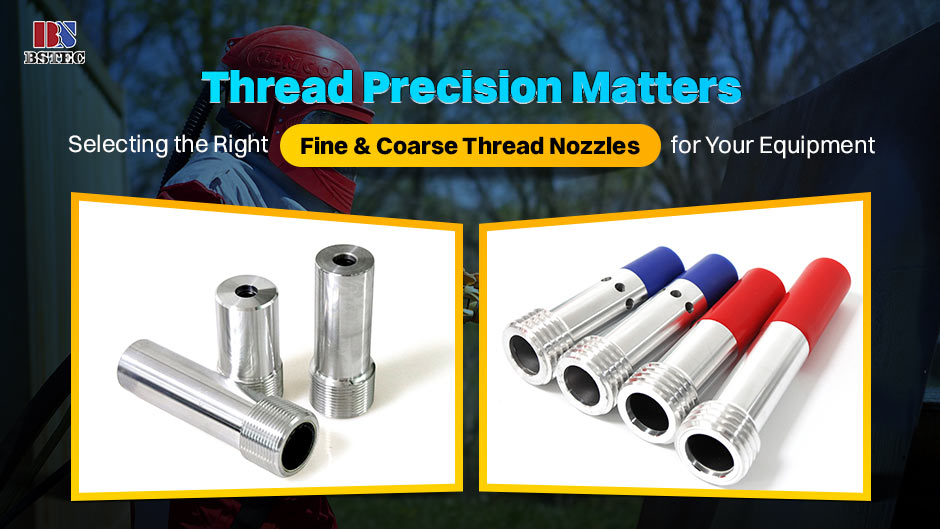
In abrasive blasting, the nozzle is your direct point of contact with the work surface, but its connection to your blast hose and machine is the critical link that ensures power, safety, and consistency. The thread type on your nozzle—often an afterthought—is, in fact, a fundamental specification that can dictate performance, compatibility, and operational security. Choosing between Fine Thread (e.g., 1-1/4” N.P.S.M.) and Coarse Thread (e.g., 2”-4 1/2 U.N.C.) configurations is more than a simple fit; it's about matching the nozzle to the specific demands of your equipment and application. This guide, featuring BSTEC's engineered solutions, will help you make the precise choice.
Understanding the Core Difference: More Than Just Threads Per Inch
At first glance, the difference is geometric: fine threads have a higher number of threads per unit length, with a smaller pitch, while coarse threads have fewer, deeper threads with a larger pitch. This structural difference translates directly into functional advantages and ideal use cases.
Fine Thread (e.g., N.P.S.M.) Advantages:
• Superior Sealing & Vibration Resistance: The greater number of engaged threads creates a larger surface contact area. This results in a tighter, more secure seal that is less prone to loosening under high vibration, making it ideal for high-pressure applications and equipment with significant pulsation.
• Precision Fit for Standardized Ports: Fine threads like N.P.S.M. are often the standard on many precision-engineered blast machines and auxiliary equipment, ensuring a perfect, leak-free interface.
BSTEC Example: Our Long venturi nozzles with Fine Thread (1-1/4” N.P.S.M.) and Steel Jacket (e.g., Model USVF175 series) are engineered for this. The robust steel jacket provides superior compression and bending resistance, while the fine thread ensures a secure connection that maintains integrity under demanding conditions.
Coarse Thread (e.g., U.N.C.) Advantages:
• Rapid Installation & Removal: The larger pitch allows for faster threading, significantly reducing downtime during nozzle changes or maintenance.
• Forgiveness to Damage & Debris: The deeper threads are more resistant to cross-threading and are less likely to be jammed by minor nicks or abrasive dust, offering better durability in harsh, high-wear environments.
• Industry-Standard for Heavy-Duty Hoses: The 2”-4 1/2 U.N.C. coarse thread is the ubiquitous connector for most industrial blast hoses, offering broad compatibility.
Head-to-Head Comparison: Fine Thread vs. Coarse Thread
Feature | Fine Thread Nozzle (e.g., 1-1/4” N.P.S.M.) | Coarse Thread Nozzle (e.g., 2”-4 1/2 U.N.C.) |
Primary Strength | Secure, Vibration-Resistant Seal | Durability & Fast Operation |
Ideal For Equipment | Fixed machines, automated systems, high-precision blast cabinets, units with N.P.S.M. fittings. | Portable blast pots, hand-held units, general contractor equipment, standard industrial hoses. |
Operational Context | Environments where leaks must be minimized and connection integrity is paramount (e.g., high-pressure blasting, enclosed systems). | Rugged field conditions, frequent nozzle changes, situations where speed and resistance to thread damage are critical. |
BSTEC Solution Highlight | USVF175 Series with Steel Jacket: Combines secure fine thread connection with a robust steel jacket for maximum stability in precision applications. | USVC Series with Al Jacket: Features the industry-standard coarse thread with a lightweight aluminum jacket, perfect for efficient, high-mobility operations. |
Making the Strategic Choice with BSTEC
Your choice should align with your equipment's design and your daily operational realities.
Choose BSTEC Fine Thread Nozzles When:
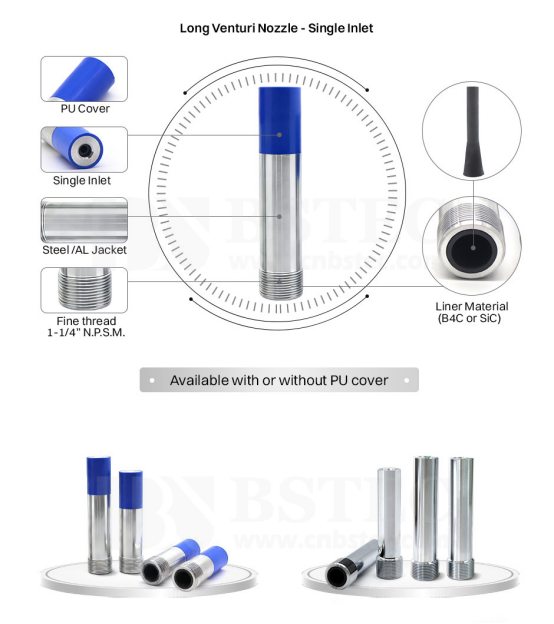
Your blast machine or hose end is specifically designed with N.P.S.M. (Fine) threads. Forcing an adapter or using the wrong thread compromises safety and performance.
You operate high-pressure systems or automated blasting lines where vibration resistance and leak prevention are non-negotiable for efficiency and safety.
Application Example: For critical surface preparation on aerospace components or precision decorative work on stone where equipment stability is key, our USVF175 Steel Jacket Fine Thread Nozzle delivers the reliable, secure connection required.
Choose BSTEC Coarse Thread Nozzles When:
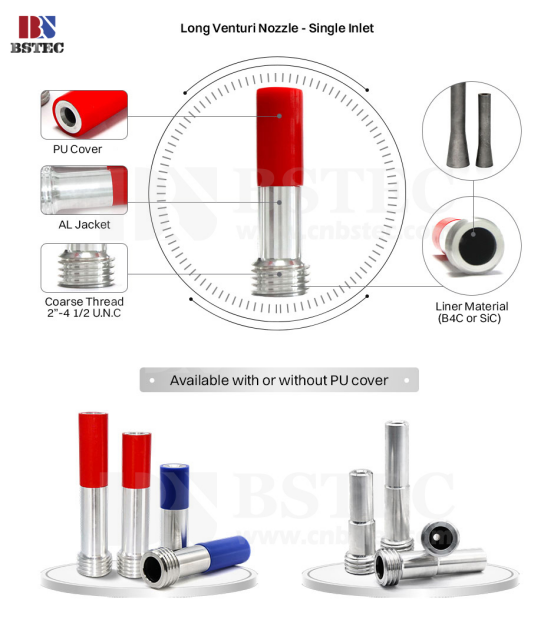
You are using standard, portable contractor-grade equipment where the 2”-4 1/2 U.N.C. thread is the norm. This ensures plug-and-play compatibility.
Speed of setup and changeover directly impacts your project timelines, such as in shipyard maintenance, large-scale structural steel cleaning, or concrete blasting.
Your work environment is particularly harsh, with a high risk of threads being bumped or clogged with debris.
Conclusion: Precision in the Details Drives Performance
Specifying the correct thread type is a simple yet powerful way to enhance safety, reduce downtime, and ensure optimal power transfer from your machine to the work surface. It’s a detail that underscores professional-grade operation.
Ready to Ensure a Perfect Thread Match for Your Equipment?
At BSTEC, we provide both Fine Thread (N.P.S.M.) and Coarse Thread (U.N.C.) options across our Venturi nozzle range, all built with our signature premium wear-resistant liners (B4C & SiC) for a long service life. Don't compromise your setup with an incompatible connection.
Visit www.cnbstec.com today to explore our detailed specifications. Filter by thread type, bore size, and jacket material to find the exact nozzle that screws seamlessly onto your equipment and into your workflow.
BSTEC – Where Every Thread is Engineered for a Flawless Connection


