
Performance, Classification and Application of Abrasive Metering Valves

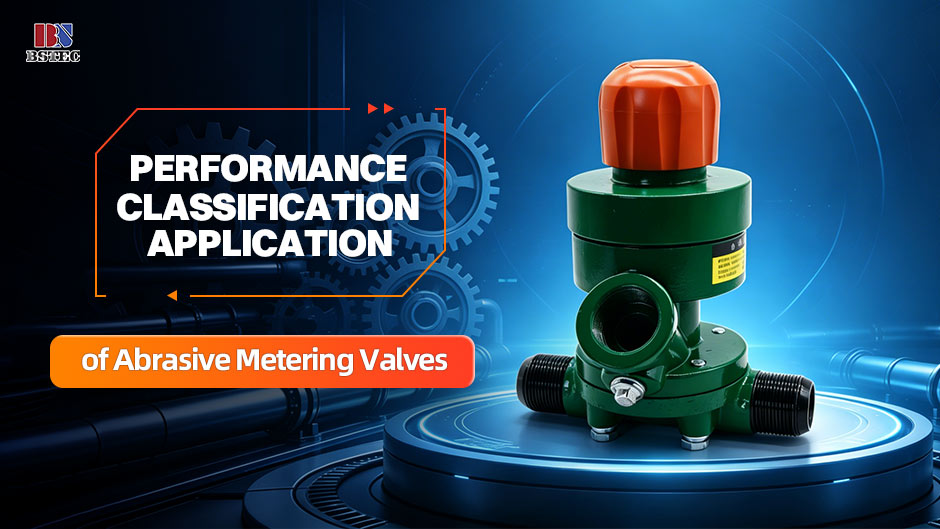
Introduction
Industrial abrasive blasting is a core surface treatment technology widely used in shipbuilding, bridge engineering, equipment manufacturing and pipeline maintenance. It is mainly applied to remove rust, oxide layers and dirt, adjust surface roughness, and enhance the adhesion of subsequent anti-corrosion coatings. In the entire blasting system, abrasive metering valves are regarded as the core precision component, which directly controls the delivery volume, stability and uniformity of abrasive media. The operating accuracy and stability of metering valves determine the final blasting quality, material consumption cost and overall construction consistency. Compared with ordinary industrial fluid valves, abrasive metering valves are specially optimized for high-hardness, high-wear granular media, making them indispensable basic equipment for modern standardized blasting operations.
Functional Principles of Abrasive Metering Valves
Abrasive metering valves are installed between the blast pot and the compressed air pipeline, undertaking the key function of quantitative conveying and mixing regulation of abrasives. Common blasting media include garnet, aluminum oxide, steel grit and quartz sand, all of which feature high hardness and strong abrasiveness. Traditional blasting equipment without precise metering devices often suffers from uneven abrasive output: excessive abrasive supply leads to material waste and excessive surface polishing, while insufficient flow results in incomplete derusting and uneven surface roughness. Professional abrasive metering valves solve these industrial pain points by precisely controlling the opening and closing of the flow channel, stabilizing the mixing ratio of abrasives and compressed air, and ensuring uniform and consistent blasting effect on the working surface.
Main Classification and Application Scenarios
According to structural design and operation modes, abrasive metering valves are mainly divided into manual and pneumatic automatic types, which are applicable to different production and construction scenarios. The detailed performance comparison is shown in the table below:
Valve Type | Structural Features | Core Advantages | Applicable Scenarios |
Manual Metering Valve | Equipped with adjustable handwheels and locking nuts, simple mechanical structure, no pneumatic auxiliary parts | Low failure rate, convenient daily maintenance, low cost, stable static flow control | Small-batch blasting, fixed-process workshop operation, low-frequency construction scenarios |
Pneumatic Automatic Metering Valve | Fitted with wear-resistant bushings and sealed plungers, supports pneumatic signal linkage and remote control | Real-time flow adjustment, instant start-stop response, high precision, good compatibility with intelligent systems | Large-scale engineering construction, long-term continuous operation, automated blasting production lines |
In actual operation, workers can pre-adjust the opening of manual metering valves and fix the parameters through locking devices to avoid flow deviation caused by equipment vibration during operation. Pneumatic automatic metering valves, as upgraded intelligent components, can receive remote control signals to realize instant start, stop and flow fine-tuning, which greatly improves the flexibility of blasting operation and is the mainstream configuration of modern high-standard blasting equipment.
Key Takeaways: Valve Selection Guidelines
· Manual metering valves are cost-effective and maintenance-friendly for fixed, low-frequency blasting tasks.
· Pneumatic automatic metering valves are prioritized for continuous, high-precision, and remotely controlled blasting operations.
Daily Maintenance of Abrasive Metering Valves
As a wearable core component, the service life and working stability of metering valves depend heavily on daily standardized maintenance. Regular maintenance can effectively avoid abrasive clogging, air leakage and flow instability, and reduce equipment downtime and replacement costs. The core maintenance work includes regular cleaning of internal wear-resistant bushings and plungers to prevent residual abrasives from blocking the flow channel, quarterly replacement of aging sealing diaphragms, and regular calibration of flow parameters according to abrasive types and working pressure to ensure long-term stable and accurate valve operation.
Conclusion
Abrasive metering valves are the core guarantee for precise and efficient blasting operations. Different types of metering valves meet the diversified needs of small-batch fixed operation and large-scale automated construction. Scientific selection and standardized maintenance of metering valves can effectively improve blasting quality stability, reduce abrasive waste and maintenance costs, and lay a solid foundation for the intelligent and standardized development of industrial surface treatment technology.


