


Silicon Carbide (SiC) Seal Ring
deskrizzjoni
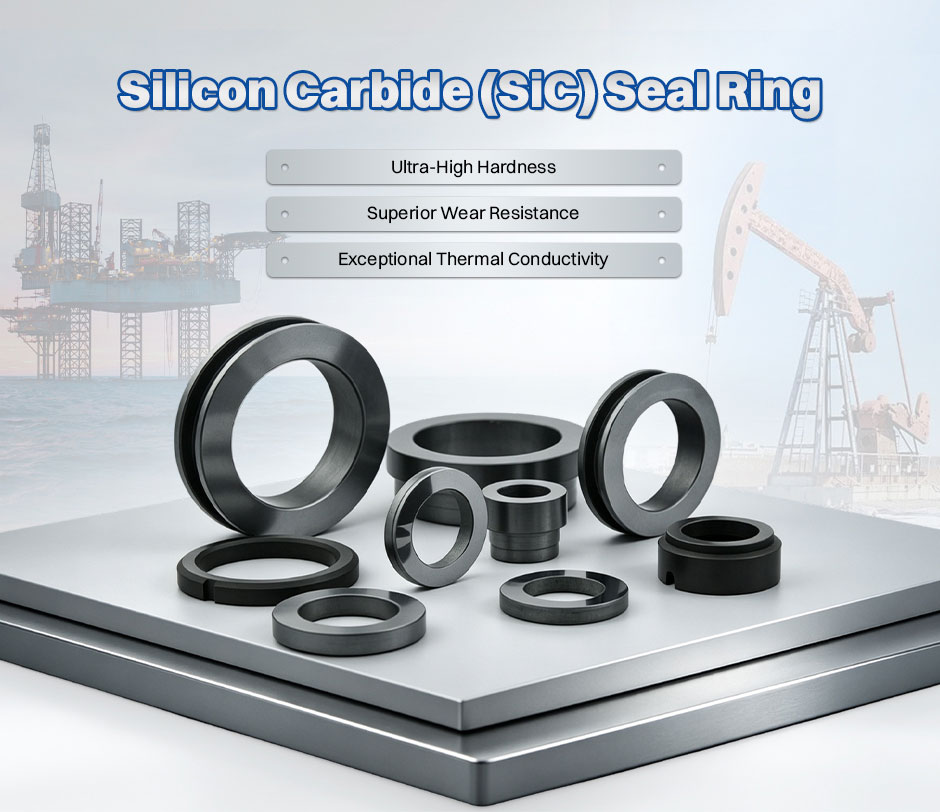

Silicon carbide (SiC) ceramic is an advanced engineering material produced through carbon–silicon reaction sintering or pressureless sintering. With exceptional hardness, excellent thermal conductivity, outstanding wear and corrosion resistance, and superior thermal shock resistance, silicon carbide is widely used in semiconductor, mechanical, chemical, and energy industries.
Its combination of strength, durability, and stability makes SiC one of the most important high-performance ceramics in modern industrial applications. Recognized as a key 21st-century engineering material, it often surpasses metals and polymers in demanding applications across petroleum, chemical engineering, steel, electronics, semiconductor, textile machinery, automotive manufacturing, and aerospace.
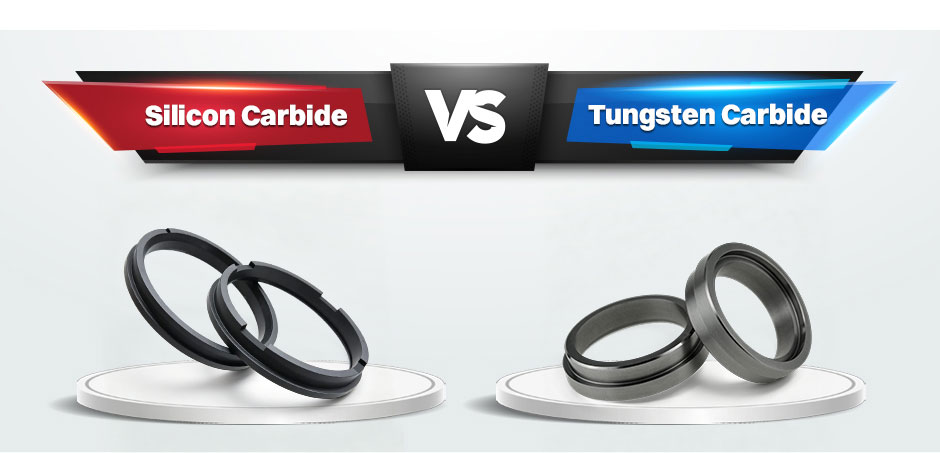
| SiC Seal Ring | Tungsten Carbide Seal Ring | |
| Best For | Chemical applications, higher temperature sealing environments, and high-speed rotating equipment. | High-pressure applications with little face distortion; extreme debris mechanical seal environments. |
| Advantages | Much better lubrication qualities than most mechanical seal face materials; excellent corrosion resistance; lightweight; α-sintered SiC is ideal for aggressive chemical media. | Extremely tough; not easy to break or crack under severe conditions; ideal for applications with mechanical shock or debris. |
| Considerations | Hard but brittle; easy to shatter or crack when contacted with force or dropped; requires careful handling during installation. | Higher density (heavier); lower corrosion resistance compared to SiC; not recommended for highly acidic environments. |
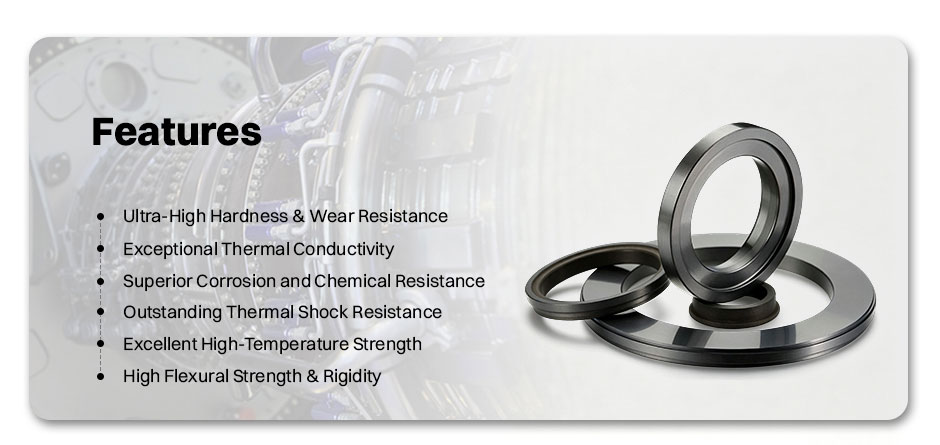
● Ultra-High Hardness & Wear Resistance
SiC ceramic has a Mohs hardness of 9.5, close to diamond. It maintains excellent wear resistance under high-load and high-speed conditions, making it ideal for demanding mechanical components.
● Exceptional Thermal Conductivity
Silicon carbide offers remarkably high thermal conductivity (up to 120–200 W/m·K), ensuring efficient heat dissipation. It is commonly used in high-power electronics and thermal management components.
● Superior Corrosion and Chemical Resistance
SiC ceramic is highly resistant to acids, alkalis, molten metal, and harsh chemical media, allowing it to perform reliably in aggressive industrial environments.
● Outstanding Thermal Shock Resistance
Thanks to its low thermal expansion and high thermal conductivity, silicon carbide can withstand rapid temperature changes without cracking, making it suitable for high-temperature and rapid-heating systems.
● Excellent High-Temperature Strength
SiC maintains its mechanical strength even at temperatures above 1400°C, making it ideal for high-temperature structural components.
● High Flexural Strength & Rigidity
It offers excellent bending strength and stiffness, allowing precision manufacturing of thin-wall or complex-shaped ceramic parts.
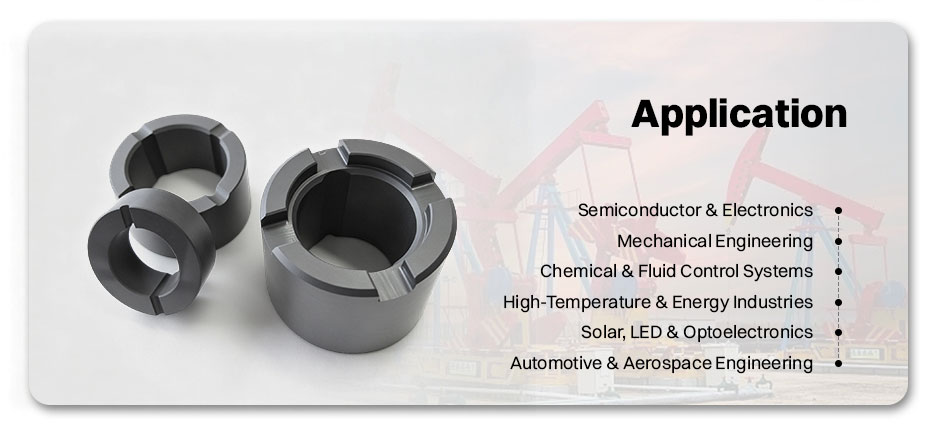
● Semiconductor & Electronics
Heat spreaders, susceptors, wafer carriers, diffusion furnace components, and high-thermal-conductivity parts.
● Mechanical Engineering
Wear-resistant bushings, sleeves, mechanical seals, bearings, valve components, and precision structural parts.
● Chemical & Fluid Control Systems
Pump parts, sealing rings, valve seats, nozzles, flow control components, corrosion-resistant liners.
● High-Temperature & Energy Industries
Kiln furniture, burner nozzles, heat exchangers, furnace components, and thermal processing equipment.
● Solar, LED & Optoelectronics
Substrates, fixtures, carriers, and high thermal-conductivity support components.
● Automotive & Aerospace Engineering
High-temperature engine parts, turbocharger components, lightweight wear-resistant elements.
Advanced ceramics—known for their excellent wear resistance, corrosion resistance, high-temperature stability, and low density—are recognized as one of the most promising materials of the 21st century. As a key class of modern engineering materials, they offer superior performance compared with traditional ceramics and often surpass metals and polymers in demanding applications.
Today, advanced ceramics are widely used in industries such as petroleum, chemical engineering, steel, electronics, semiconductor, textile machinery, and automotive manufacturing. They also play an essential role in aerospace and other high-performance engineering fields.
Whether you need a standard silicon carbide seal ring or a custom-engineered solution for a specialized application, our team of engineers is ready to assist you. Provide your drawings, specifications, or application details, and we will deliver the optimal solution for your requirements.

1. Inti kumpanija kummerċjali jew manifattur?
Aħna fabbrika, prinċipalment prodott karbur tat-tungstenu, karbur tal-boron, u prodotti tal-karbur tas-silikon. U nagħmlu wkoll kummerċ fuq accessaries relatati għal kull ħtiġijiet tal-klijenti.
2. Kif nistgħu niggarantixxu l-kwalità?
Dejjem kampjun ta 'qabel il-produzzjoni qabel il-produzzjoni tal-massa; Dejjem Spezzjoni finali qabel il-ġarr
3. Għaliex għandek tixtri mingħandna, mhux minn fornituri oħra?
Esperjenza rikka fuq prodott u kwalità exportingISO, prezz tajjeb u twassil veloċi ambitu wiesa 'produzzjoni għal mhux obbligatorju; tiffranka l-ispiża, tiffranka l-enerġija, tiffranka l-ħin; jiksbu prodotti ta 'kwalità għolja, jiksbu aktar opportunità ta' negozju, irbaħ is-suq!
4. Kemm huwa twil il-ħin tal-kunsinna tiegħek?
Ġeneralment, huwa 3 ~ 5 ijiem jekk il-merkanzija tkun fl-istokk; jew huwa 15-25 jum jekk il-merkanzija ma tkunx fl-istokk, skont il-kwantità tal-ordni.
5. Inti tipprovdi kampjuni? Huwa b'xejn jew żejjed?
Ġeneralment, aħna ma nipprovdux kampjuni b'xejn. Imma nistgħu nnaqqsu l-ispejjeż tal-kampjuni mill-ordnijiet bl-ingrossa tiegħek.
6. X'inhu t-termini u l-metodu tal-ħlas tiegħek?
Ħlas Inqas minn jew ugwali għal 1000USD, 100% bil-quddiem. Ħlas Akbar minn jew ugwali għal 1000USD, 30% T/T bil-quddiem, bilanċ qabel il-ġarr. Aħna naċċettaw T/T, L/C, Alipay, PayPal, Western Union WeChat, eċċ.


