
The Ultimate Guide to Choosing the Right Abrasive Nozzle: Boron Carbide vs. Tungsten Carbide vs. Ceramic

The Ultimate Guide to Choosing the Right Abrasive Nozzle: Boron Carbide vs. Tungsten Carbide vs. Ceramic
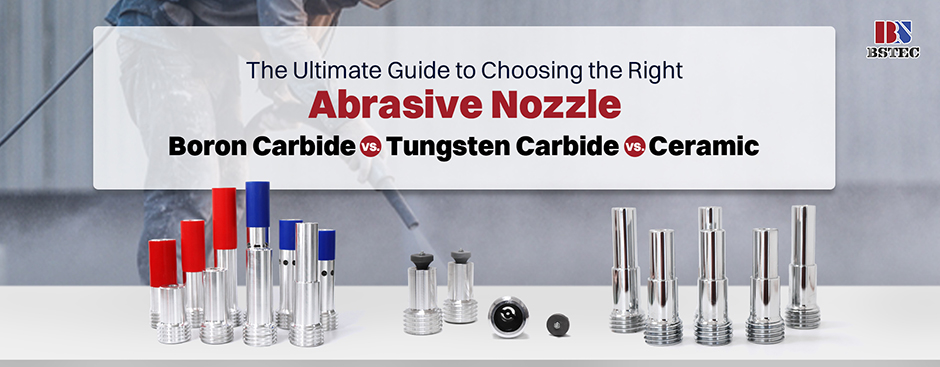
In the abrasive blasting industry, efficiency and cost-effectiveness are the primary things we need to consider. The nozzle is the critical component that ultimately dictates the performance of abrasive blasting, while operators often focus on the compressor and abrasive media. The choice of nozzle material is a strategic decision that directly impacts productivity, operating costs, and the bottom line. Although they are always treated as consumables. Therefore, understanding the differences between ceramic, tungsten carbide, and boron carbide nozzles is essential for optimizing any blasting operation.
The number one primary enemy of nozzles is easy to wear. As abrasive particles accelerate through the orifice at high velocity, they erode the opening, gradually enlarging it. This wear has brought consequences, which is a larger orifice, increased air consumption, reduced blast pressure, and diminished cutting speed. This leads to longer project times, higher media usage, and escalating costs. Therefore, selecting the right wear-resistant material is the most effective way to solve this problem.
The three major nozzle types offer a stark contrast in terms of cost-effectiveness, both in terms of initial investment and long-term value. As an entry-level option, ceramic (or silicon carbide) nozzles offer the lowest initial cost but a significantly shorter service life. While suitable for light, intermittent use or with low-abrasive materials, their rapid wear makes them an uneconomical bargain in professional applications.
It's no coincidence that tungsten carbide nozzles have become the industry standard. They strike the perfect balance between durability and cost, far outlasting ceramic nozzles, making them the preferred choice for general-purpose blasting applications involving a wide variety of media. For most day-to-day operations, tungsten carbide offers reliable performance without the high initial investment.
Boron carbide nozzles are the undisputed first choice for demanding applications involving high forces. Boron carbide offers exceptional wear resistance. While initially costly, its exceptionally long service life delivers a far greater return on investment (ROI). For multi-shift operations, the reduced downtime associated with changing nozzles, along with savings on compressed air and abrasive media, quickly offsets the high initial investment. This investment is a true value for money.
The choice depends on your specific application scenario. Consider the duration of your daily blasting hours, the type of abrasive you'll use, and your budget. For occasional, everyday use, ceramics are sufficient; for routine maintenance, tungsten carbide is a reliable option; and for specialized, high-intensity applications that demand maximum uptime and minimal operating costs, boron carbide is the optimal solution.
In short, treating the nozzle as just another accessory is a costly mistake. It's a critical, precision component that controls the entire blasting operation. By choosing the right material—boron carbide for demanding applications, tungsten carbide for more routine applications—you're not just spending money, but making strategic decisions that deliver improved benefits and truly reduce the cost of your blasting operations.


