Angle Blast Nozzles
kev piav txog
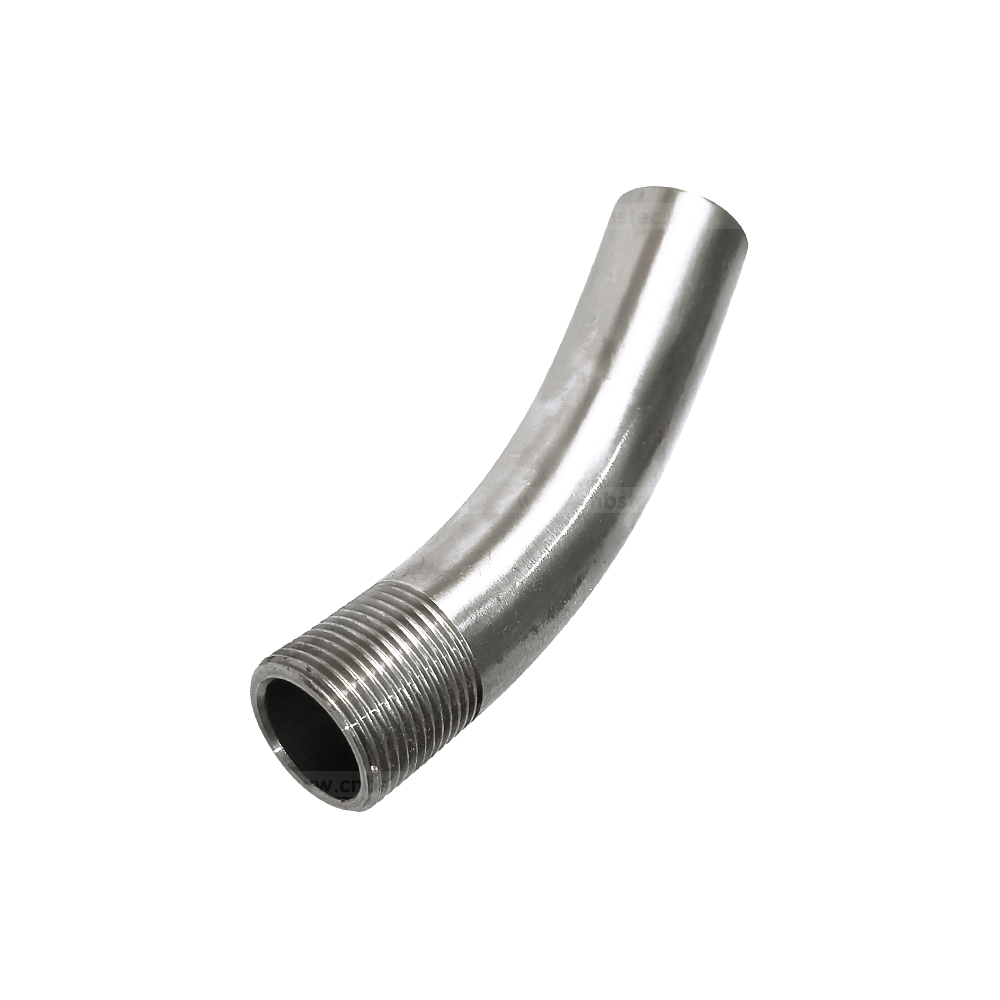
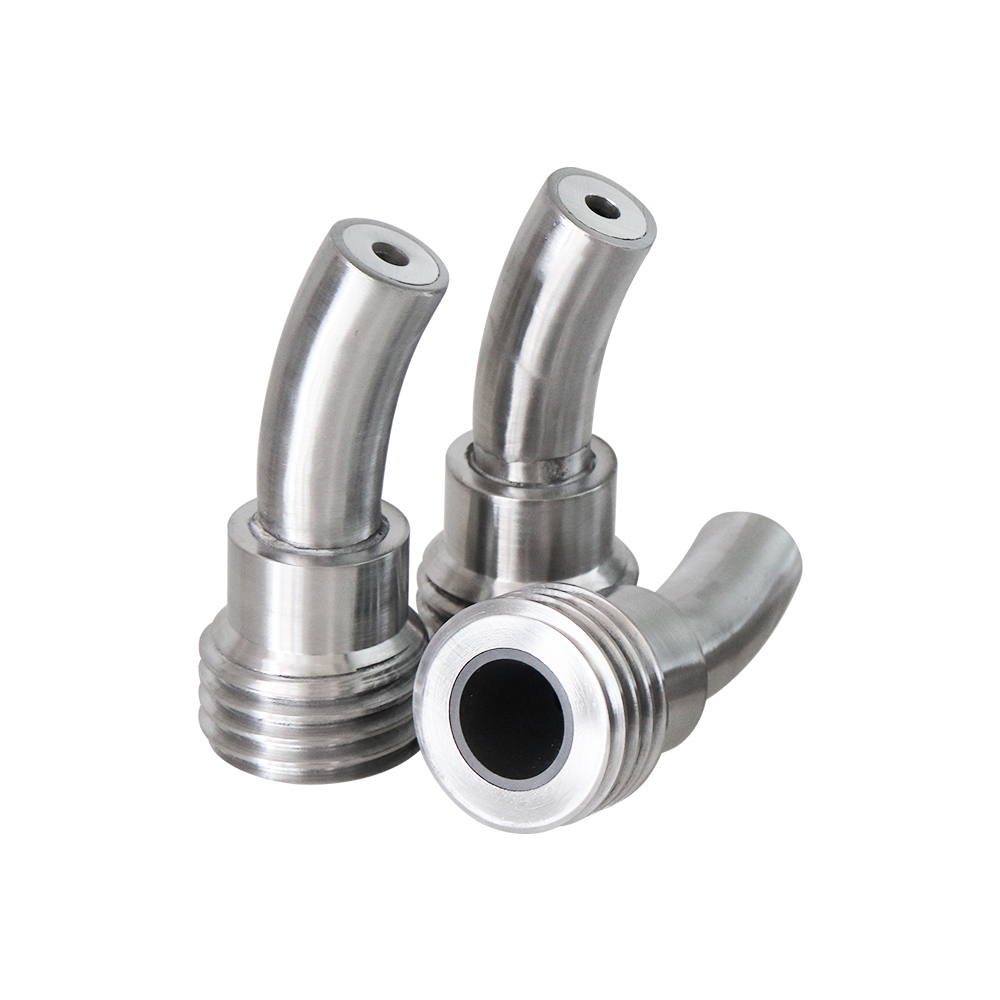
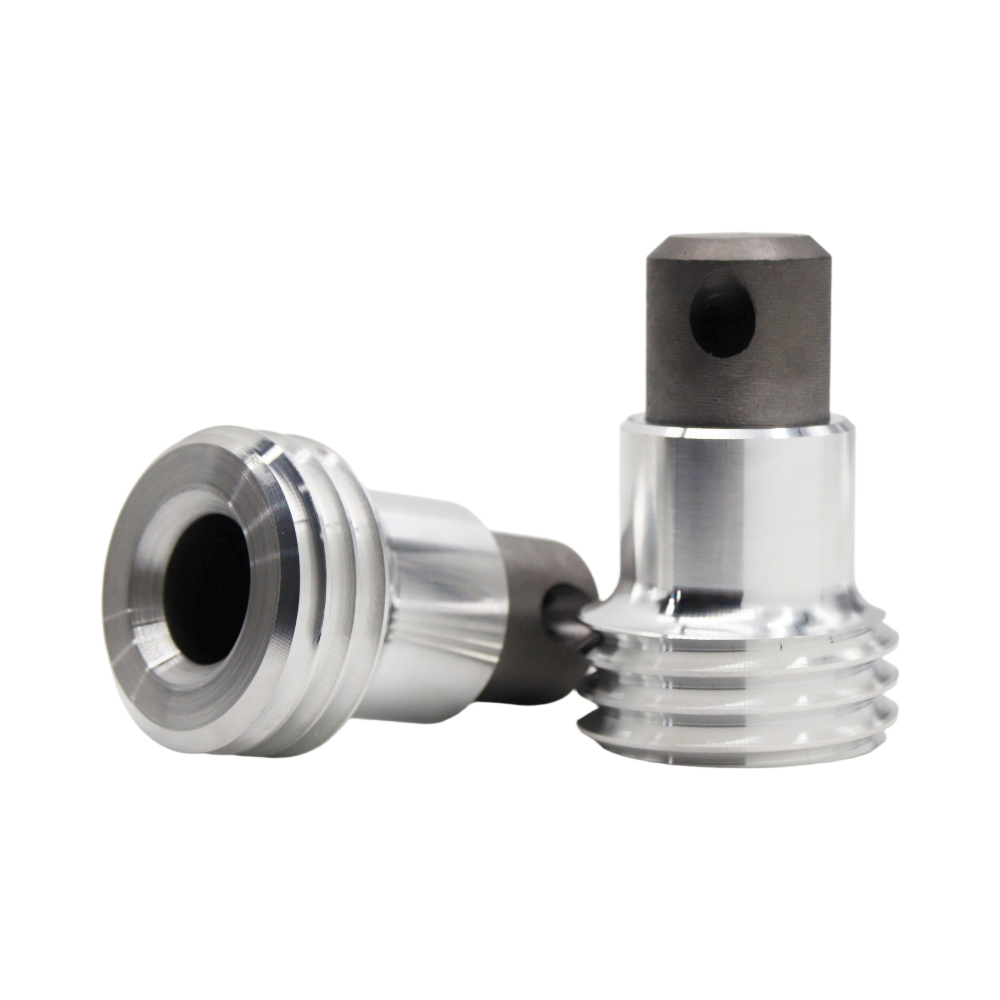
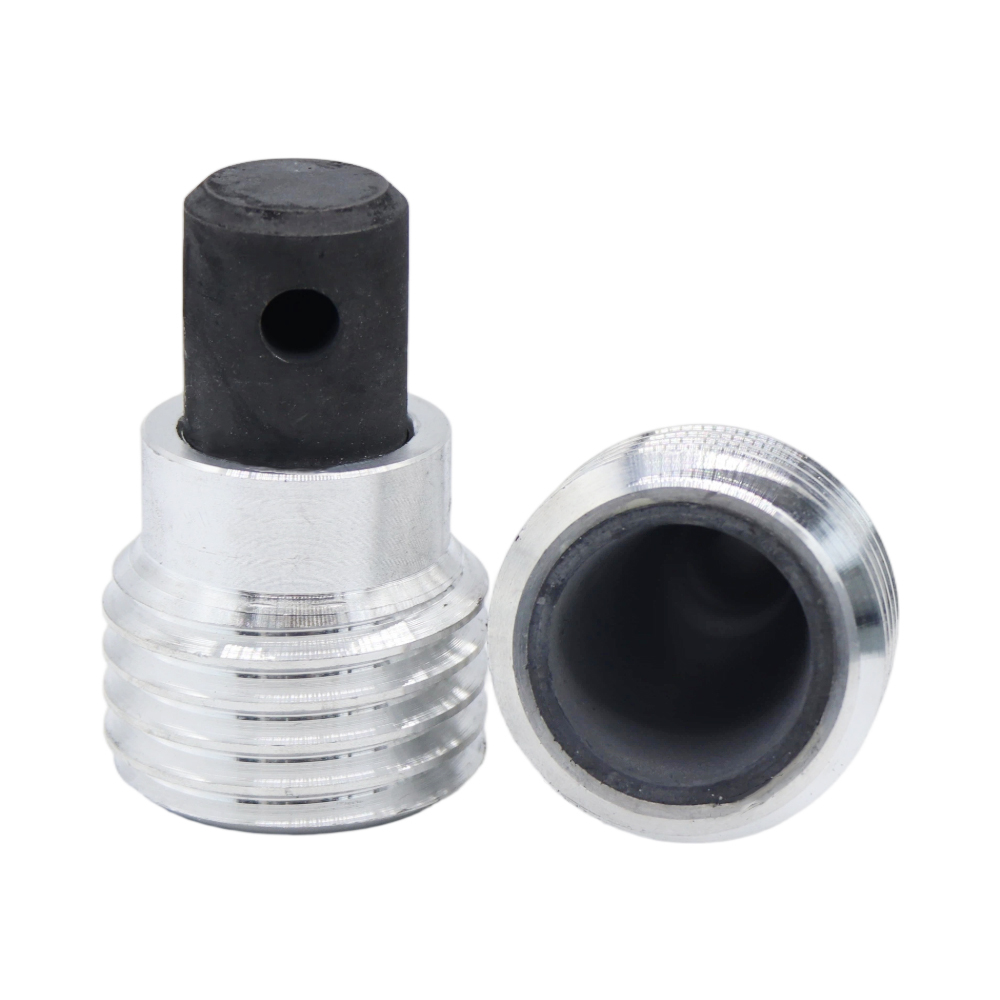
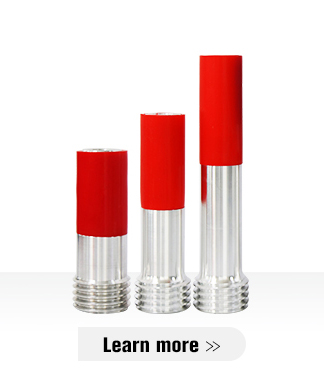
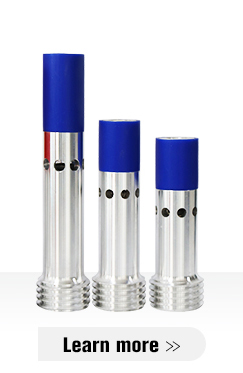
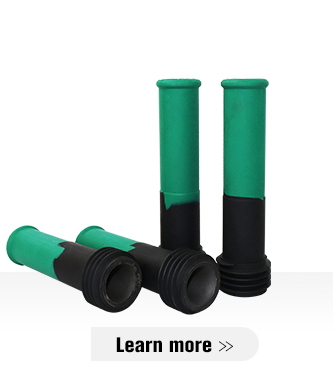
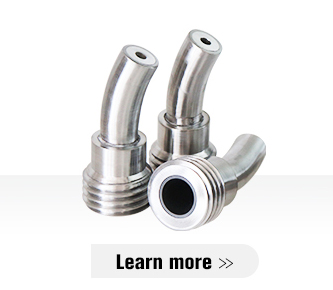
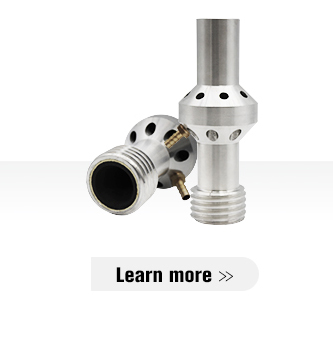
Angle Blast Nozzles are specially designed sandblasting nozzles that direct abrasive media sideways instead of straight ahead. Available with 45°, 90°, or 135° outlets, they provide access to corners, behind flanges, inside beams, and other confined areas that straight nozzles cannot reach.
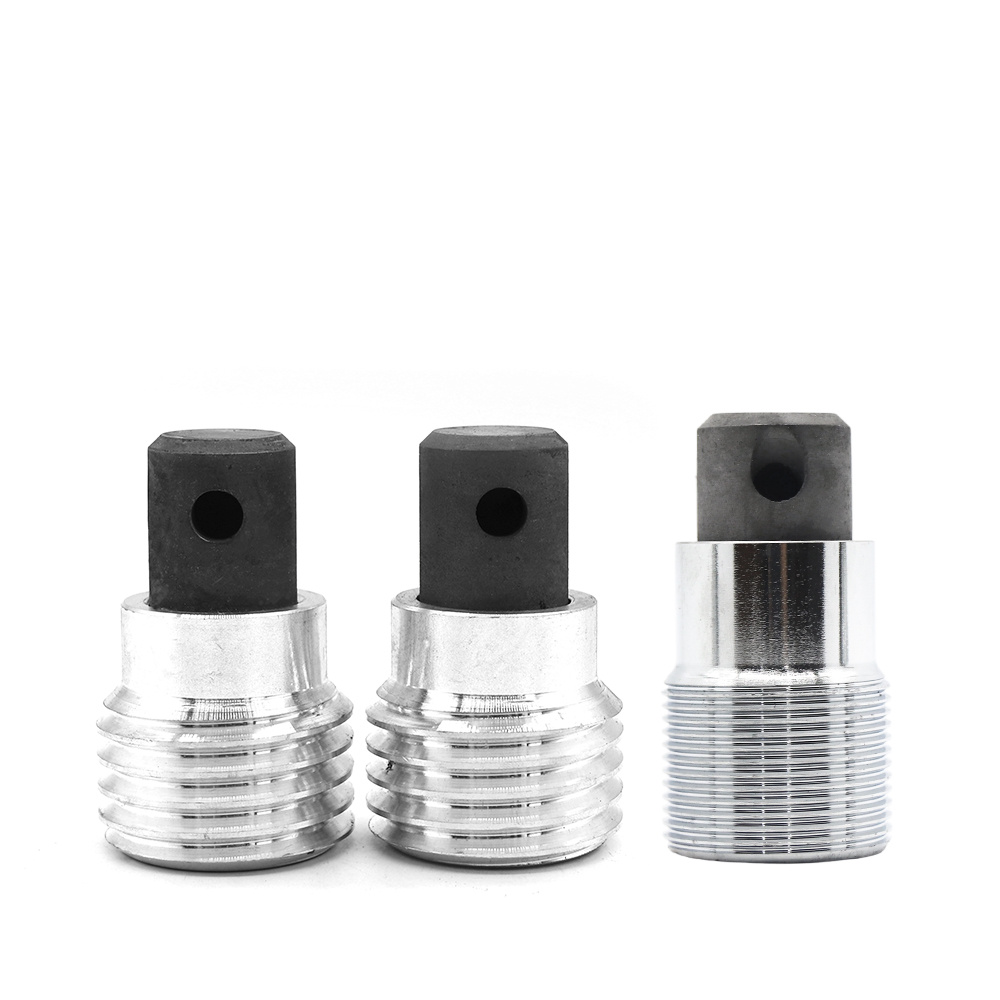
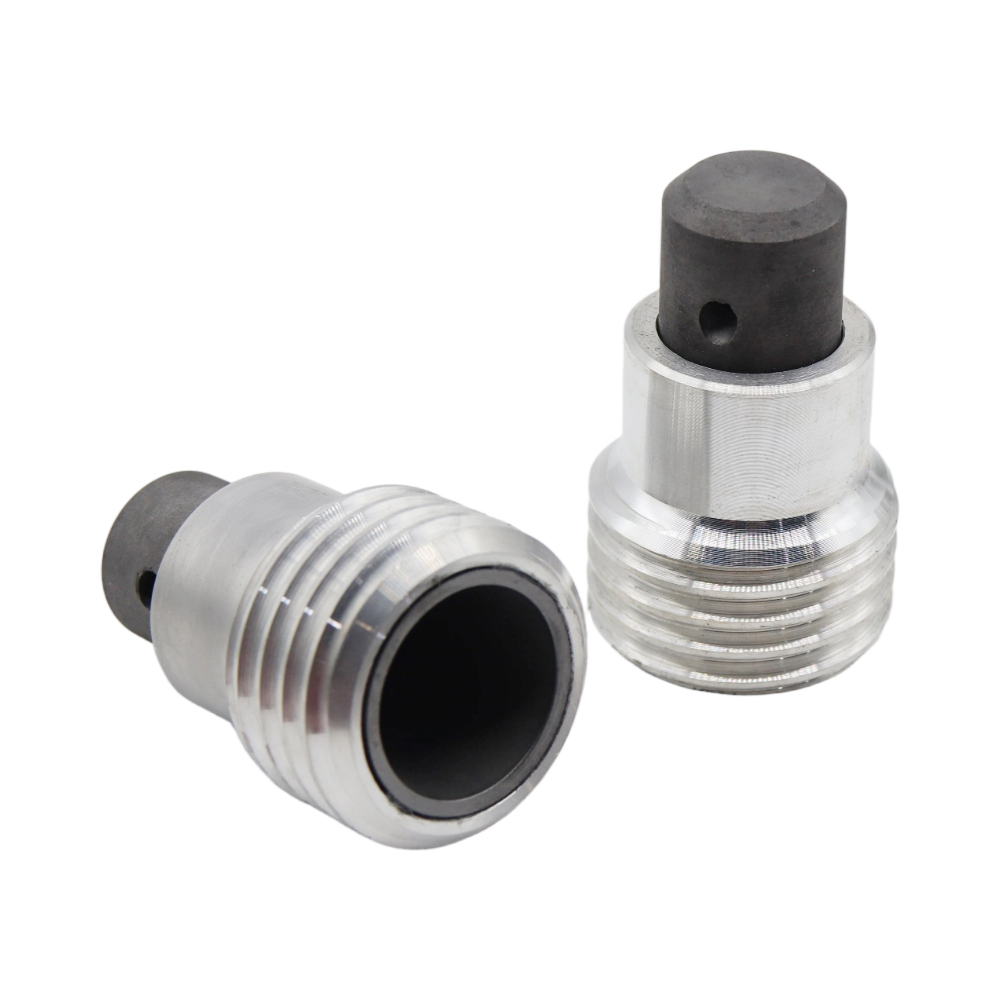
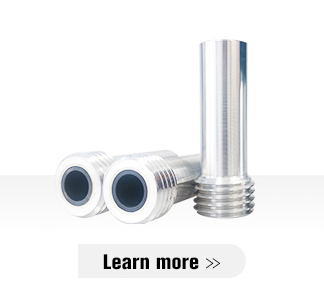
The internal liner is made of tungsten carbide (TC) – an extremely wear-resistant material that withstands continuous abrasive impact. An aluminum jacket protects against ricochet damage and extends service life.
Models include single, double, or triple outlet bores: single bore delivers concentrated impact for weld prep and precision work; double and triple bores expand coverage for faster cleaning on larger surfaces.
This design ensures consistent abrasive contact in confined and irregular spaces, making Angle Blast Nozzles essential for structural steel, oil & gas, marine, and industrial maintenance projects.

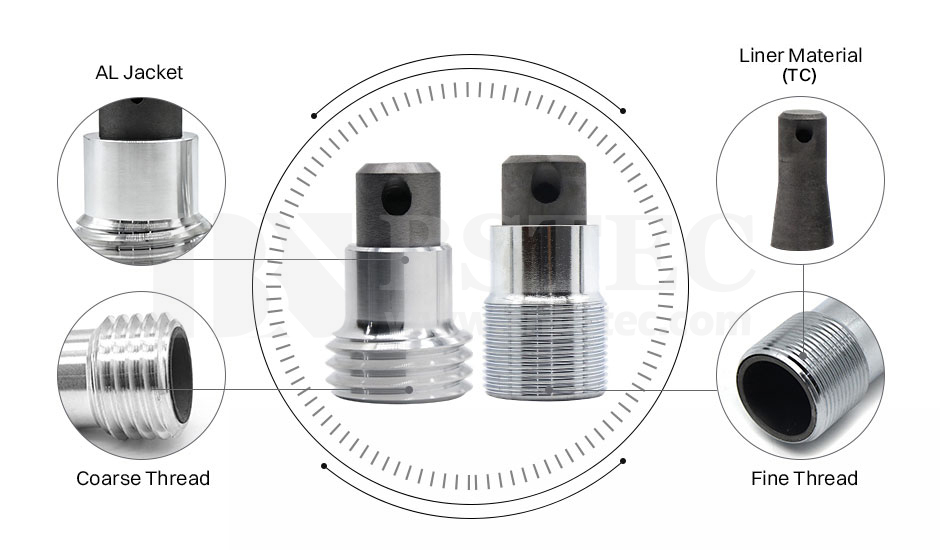
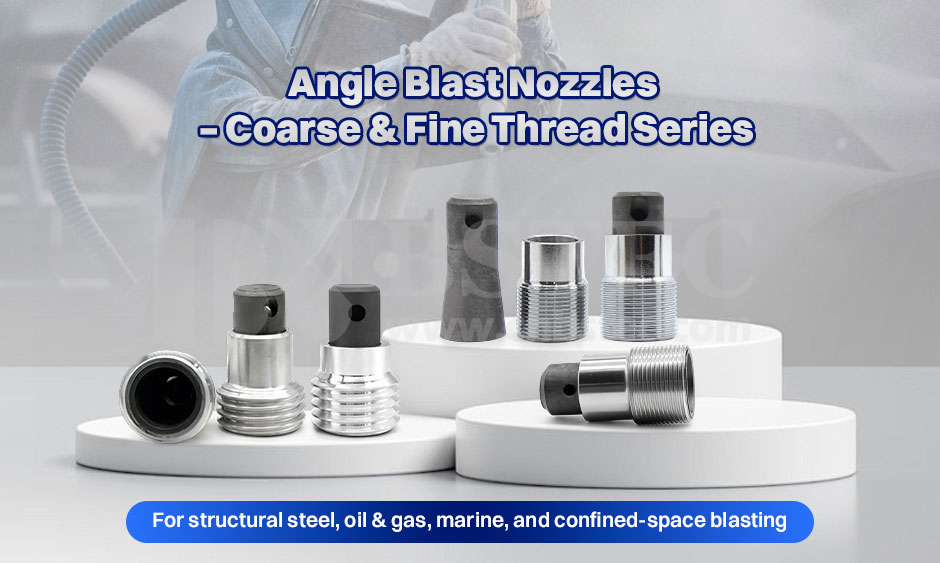
Two thread families available:
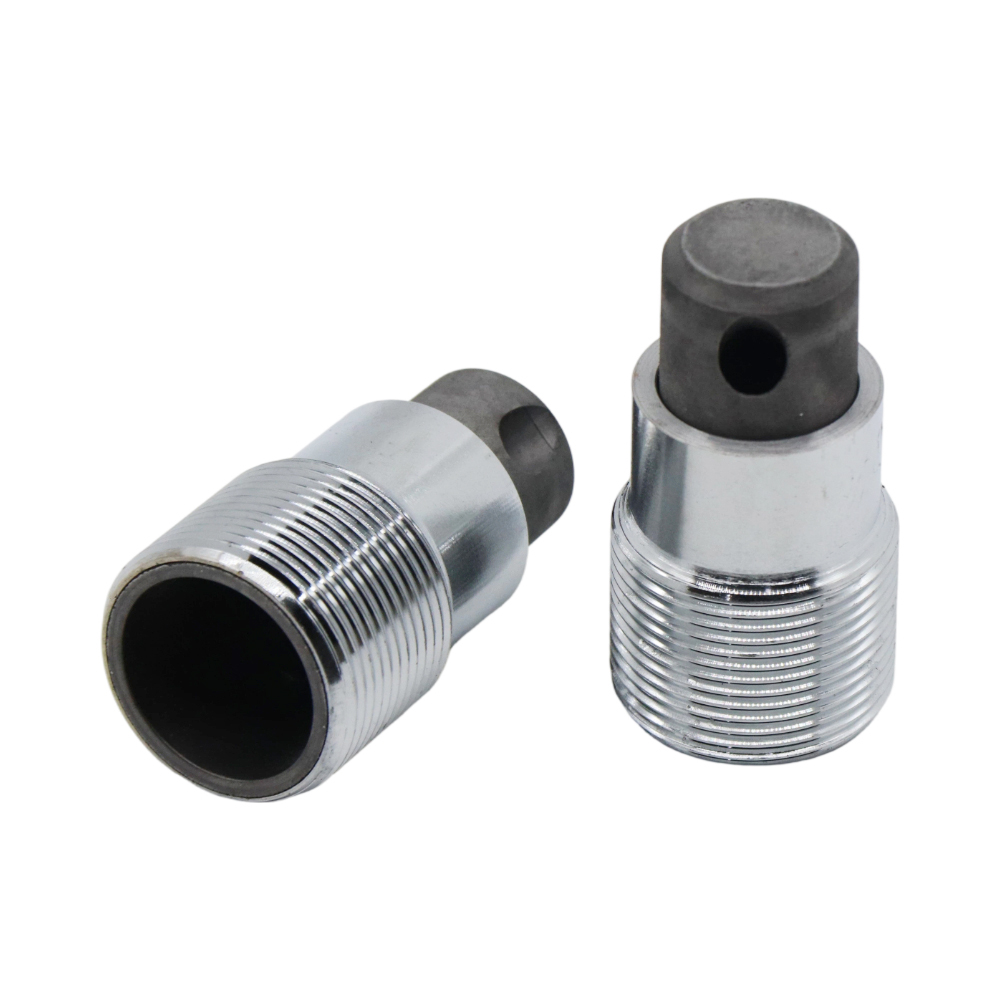
Coarse Thread – 2"-4 1/2 U.N.C. With Al Jacket (45°/90°, 1/2/3 outlets)
Fine Thread – 1-1/4" N.P.S.M. With Al Jacket (45°/90°, 1/2/3 outlets)
Each available with 1, 2, or 3 outlets to balance impact vs. coverage.
Ideal for blasting recesses, pipe internals, behind angles, lattices etc.
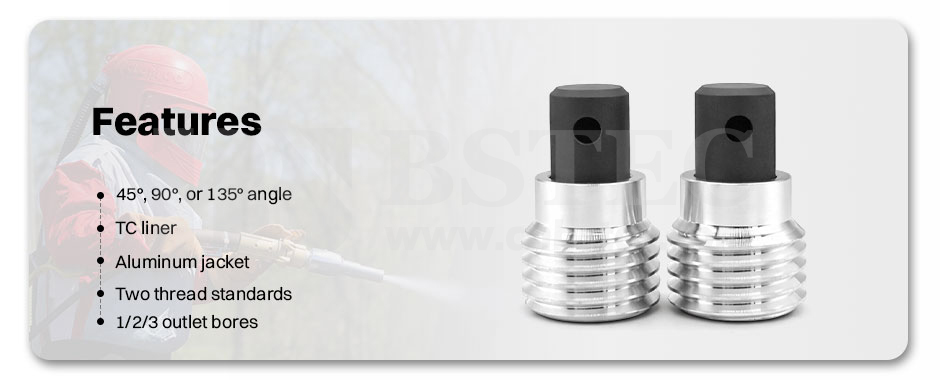
45°, 90°, or 135° angle:Choose 45° for corners & weld seams, 90° for behind profiles & internal flanges, 135° for extreme reverse or deep cavities.
TC liner: TC for long wear life, higher hardness under extreme abrasion.
Aluminum jacket: Lightweight, corrosion-resistant, protects the liner from external impact.
Two thread standards: Coarse & Fine.
1/2/3 outlet bores: Multi-bore configurations expand coverage and increase productivity during cleaning operations.
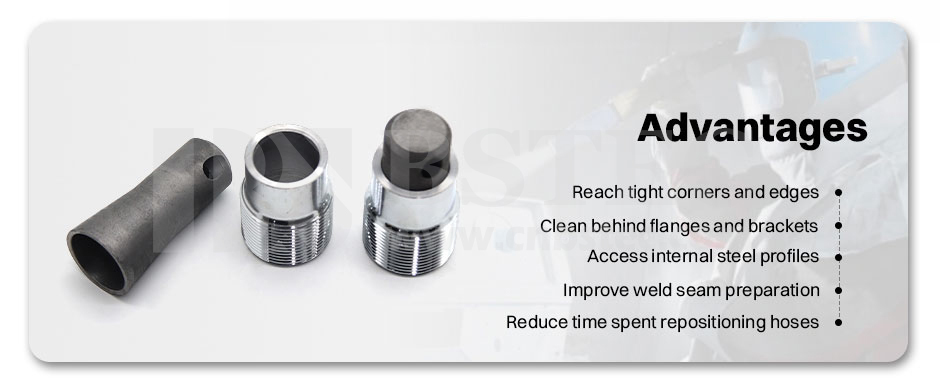
Reach tight corners and edges: Straight nozzles cannot bend into inside corners of H-beams or angle irons. Angle nozzles (45°, 90°, or 135°) direct abrasive precisely into these tight areas, eliminating unblasted spots.
Clean behind flanges and brackets: The back sides of flanges and stiffeners are blind spots for straight nozzles. A 90° or 135° angle nozzle blasts sideways to clean both sides of rust and coating in one pass.
Access internal steel profiles: Box columns and hollow sections need internal cleaning. Insert an angle nozzle through the opening to blast sideways onto inner walls – something straight nozzles cannot do.
Improve weld seam preparation: Weld toes often have undercuts and oxidation. A 45° angled blast directly impacts the weld toe, creating a clean surface for better coating adhesion.
Reduce time spent repositioning hoses: Contractors often select Angle Blast Nozzles for structural steel and pipeline maintenance tasks.
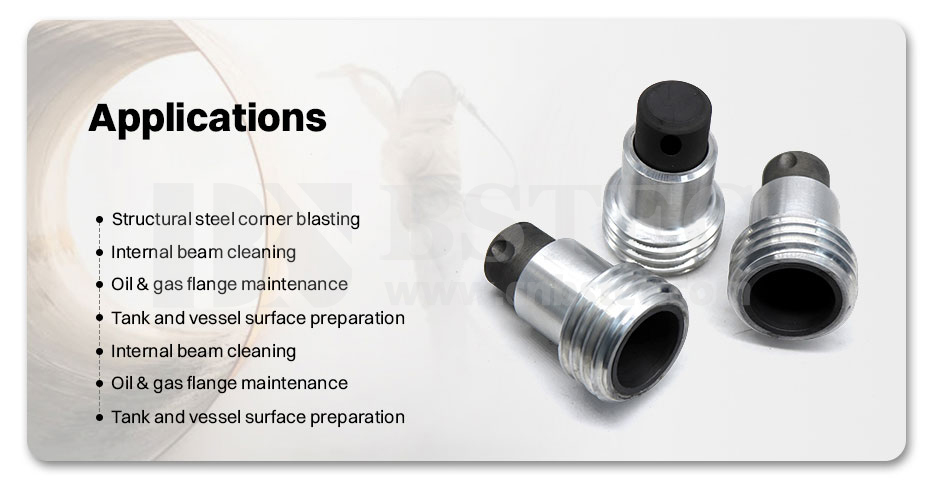
Structural steel corner blasting: A 45° angle nozzle directs abrasive deep into the inside corner radius of H-beams and I-beams, removing mill scale and rust completely.
Internal beam cleaning: Insert an angle nozzle through access holes or open ends to blast sideways onto top, bottom, and side walls of beam interiors in one operation.
Oil & gas flange maintenance: A 90° or 135° angle nozzle precisely blasts the flange face and ring groove from a parallel or steep orientation, avoiding damage to the sealing surface.
Tank and vessel surface preparation: Angle nozzles (45°, 90°, or 135°) navigate around stiffener rings and nozzles to clean inside corners and behind stiffeners, ensuring full lining coverage.
Marine hull edge cleaning: A 45° angle nozzle delivers high-impact abrasive to hull edges, stiffener brackets, and welds, removing rust, old coating, and marine growth.
Industrial refurbishment work: Clean behind brackets, inside C-channels, and around bolt holes – areas that straight blast streams miss – reducing hand tool touch-up.
Weld joint surface preparation: The angled discharge pattern ensures consistent abrasive contact in confined and irregular spaces.






1. Koj puas yog tuam txhab lag luam lossis chaw tsim khoom?
Peb yog lub Hoobkas, feem ntau yog cov khoom lag luam tungsten carbide, boron carbide, thiab cov khoom siv silicon carbide. Thiab peb kuj ua lag luam ntawm cov khoom siv cuam tshuam nrog rau cov neeg siv khoom xav tau.
2. Peb tuaj yeem lav qhov zoo li cas?
Ib txwm ua qauv ua ntej ua ntej ntau lawm; Ib txwm soj ntsuam zaum kawg ua ntej ua zaub mov xa tuaj
3. Vim li cas koj yuav tsum yuav los ntawm peb, tsis yog los ntawm lwm tus neeg muag khoom?
Kev paub nplua nuj ntawm cov khoom lag luam thiab kev xa tawm ISO zoo, tus nqi zoo thiab xa khoom sai dav dav rau kev xaiv; txuag nqi, txuag zog, txuag lub sijhawm; tau txais cov khoom zoo, tau txais kev lag luam ntau dua, yeej kev ua lag luam!
4. Koj lub sijhawm xa khoom ntev npaum li cas?
Feem ntau, nws yog 3 ~ 5 hnub yog tias cov khoom muaj nyob hauv Tshuag; los yog nws yog 15-25 hnub yog tias cov khoom tsis nyob hauv Tshuag, nyob ntawm qhov kev txiav txim kom muaj nuj nqis.
5. Koj puas muab cov qauv? Puas yog dawb lossis ntxiv?
Feem ntau, peb tsis muab cov qauv dawb. Tab sis peb tuaj yeem txiav cov nqi coj mus kuaj los ntawm koj cov xaj ntau.
6. Koj cov nqe lus thiab txoj kev them nqi yog dab tsi?
Kev them nyiaj tsawg dua lossis sib npaug li 1000USD, 100% ua ntej. Kev Them Nyiaj Ntau dua lossis sib npaug rau 1000USD, 30% T / T ua ntej, sib npaug ua ntej xa khoom. Peb lees txais T / T, L / C, Alipay, PayPal, Western Union WeChat, thiab lwm yam.