
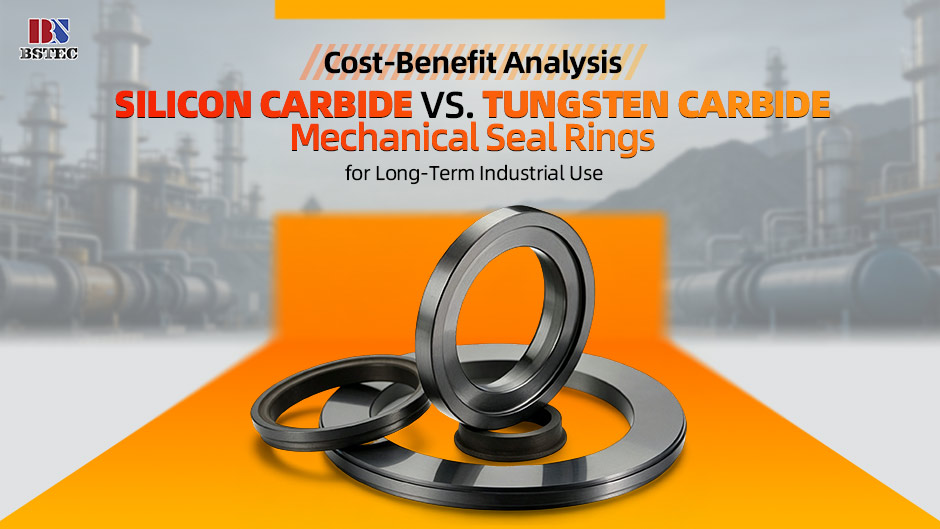
Cost-Benefit Analysis: Silicon Carbide vs. Tungsten Carbide Mechanical Seal Rings for Long-Term Industrial Use

Introduction
Initial purchase price is often the first thing procurement teams look at. But for critical components like mechanical seal rings, the true cost of ownership extends far beyond the invoice. Maintenance downtime, spare parts inventory, production losses, and premature failure costs can dwarf the initial material price difference. This article provides a comprehensive cost-benefit analysis of silicon carbide versus tungsten carbide seal rings.
Initial Material Cost
Generally speaking, high-quality silicon carbide seal rings and tungsten carbide seal rings are similarly priced, with tungsten carbide sometimes being slightly more expensive due to the cost of cobalt binder and denser raw materials. The initial purchase price difference between comparable grades is typically within 10–20%, rarely the deciding factor for informed buyers.
Service Life Impact on Cost
In clean, well-aligned, moderate-temperature applications, silicon carbide typically provides 1.5 to 3 times longer service life than tungsten carbide. This longer life directly translates to fewer seal replacements, lower labor costs, and less production downtime.
For a pump that costs $5,000 per hour in lost production during downtime, extending seal life from 12 months to 24 months saves $5,000 × 12 hours × 1 replacement = $60,000 per year. The material cost difference becomes irrelevant.
Failure Consequence Costs
This is where tungsten carbide can win. While silicon carbide offers longer average life, its failure mode — sudden cracking — can be catastrophic. If a silicon carbide seal ring shatters, debris may enter the process stream, damage downstream equipment, or cause product contamination.
Tungsten carbide typically fails through gradual wear rather than sudden fracture. This predictable failure mode allows for planned maintenance rather than emergency shutdowns, which is highly valuable in continuous process industries.
Total Cost of Ownership Summary
1. For clean, stable applications: Silicon carbide offers lower total cost of ownership due to longer service life.
2. For harsh, unpredictable, or debris-laden applications: Tungsten carbide may offer lower total cost when the cost of sudden failure is factored in.
3. Always calculate based on your specific operating conditions. There is no universal winner.
Selecting the right seal ring material for your chemical processing application requires careful analysis of your specific operating conditions. Every process is unique, and the wrong choice can lead to costly downtime, product loss, and safety hazards.
At BSTEC, we have decades of experience helping chemical processors select and manufacture the optimal silicon carbide and tungsten carbide seal rings for their specific needs. Our engineering team can review your process parameters—temperature, pressure, chemical composition, solids content, and equipment type—and recommend the ideal material grade for your application.


