
Whip Check vs. Safety Cable: Ensuring Maximum Air Hose Safety in Blasting

Whip Check vs. Safety Cable: Ensuring Maximum Air Hose Safety in Blasting
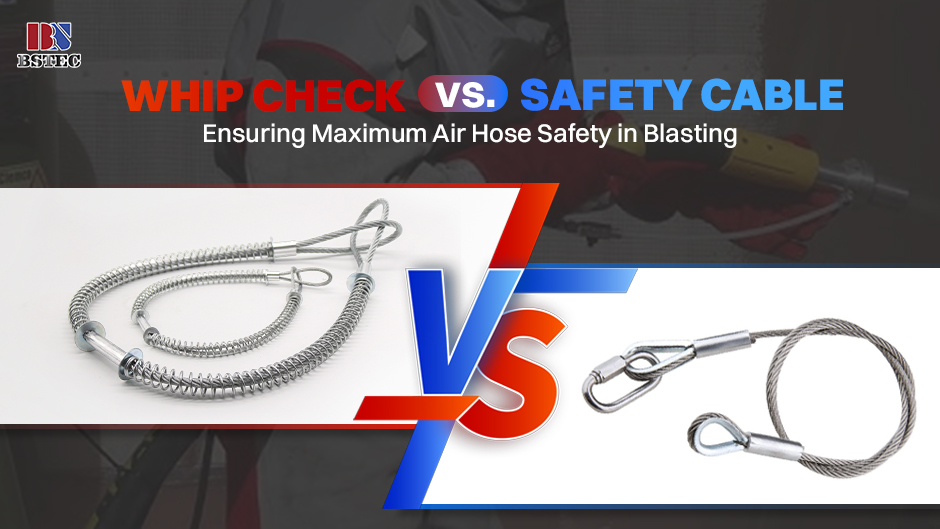
If you've been searching for safety restraints for your air hose, you've likely come across the terms "Whip Check" and "Safety Cable." This can lead to a common question: are they different, and which one do I need?
The short answer is: they are functionally the same essential safety device. The difference is often just in the naming convention used by different manufacturers or industries. There is no technical distinction that makes one superior to the other; the quality of the specific product is what matters.
"Whip Check" vs. "Safety Cable": Breaking Down the Terms
Whip Check: This term describes the primary function of the device—to "check" or stop the hose from "whipping" in case of a failure. It's a very descriptive name that is common in industrial applications like sandblasting, mining, and construction. It immediately conveys the danger it mitigates.
Safety Cable (or Safety Restraint Cable): This is a more general term that describes the device's construction and purpose. It's a "cable" used for "safety." This term might be used in a wider variety of catalogs and across multiple industries.
Think of it like "facial tissue" vs. "Kleenex." One is a general description, the other is a specific brand name that has become commonplace. In practice, when you order a "Whip Check," you are receiving a "Safety Cable," and vice versa.
What Matters More Than the Name?
Instead of focusing on the terminology, focus on the specifications and quality of the device you are purchasing:
Material & Construction: It must be a flexible, high-tensile steel cable. Never use chain, rope, or plastic zip ties as substitutes, as these will fail instantly under the force of a whipping hose.
Fittings: The end fittings should be forged steel for maximum strength and have secure, clean threads to ensure a tight connection. Avoid cast fittings which are more brittle.
Size and Rating: As outlined in our previous guides, ensure it is the correct size for your hose diameter and rated for your system's maximum pressure. This is non-negotiable.
The Bottom Line: Whether you call it a Whip Check or a Safety Cable, its non-negotiable role is to physically tether a pressurized air hose to a fixed point, preventing it from becoming a dangerous, uncontrolled projectile in the event of a disconnection.
Don't get caught up in semantics. The important thing is that you have this vital safety device correctly installed on every connection in your blasting operation. Your safety program should mandate its use, regardless of the name on the package.
→ Looking for reliable safety solutions? Our [Your Company Name] Whip Checks/Safety Cables are built to the highest standards to keep your team safe. Shop the collection now. Click our website to choose the whip check for abrasive blasting: www.cnbstec.com


